
User-first thinking: what buyers actually want
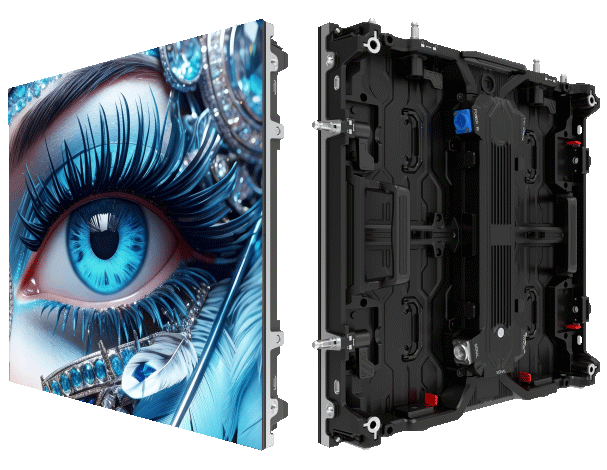
Brands want a seamless wave across a curved façade without the installation circus, and MR LED answers that by designing interlocking curved side-locks that prioritize fit, speed, and durability. As an outdoor LED supplier, their focus is on the people who hang, tune, and maintain displays — the project managers, rigging crews, and creative directors who need predictability. Expect fewer alignment tweaks, consistent pixel pitch across seams, and cabinets that lock true under real-world stress, not just on the spec sheet.
How the interlocking side-lock works on the job
At its simplest: curved side-locks give each cabinet a mechanical partner and a repeatable geometry so modules line up like trained dancers. The lock design controls panel yaw and pitch at the seam, so the LED modules create a continuous image even when the façade arcs. The result is consistent brightness and fewer visible joints — a relief for anyone who’s spent an hour chasing an offset seam under midday sun. Installers appreciate the reduced torque on fasteners and the predictable cabinet behavior under wind load — IP65-rated cabinets stay sealed and still snap together cleanly.
Field realities — what often goes wrong
Assuming a perfect wall is the biggest trap. Common mistakes from project teams include:
– Skipping a site-level survey that shows mounting frame tolerances outside the cabinet’s compensation range, which forces on-the-fly shim work.
– Using mismatched driver ICs or mixed pixel pitch modules that break visual uniformity at seams — manufacturing consistency matters.
– Underestimating the mounting structure’s deflection under load; a rigid-seeming wall can flex under wind gusts and reveal seams.
Teams that plan for these realities cut install time and avoid late-night rework — and yes, MR LED’s prefitted side-locks reduce several of these pain points.
Alternatives and when to pick them
Curved side-locks aren’t the only approach. Welded frames, custom shims, and soft-seam finishes exist and can work for one-off art installations or very shallow curves. For high-traffic locations — think Times Square or Piccadilly Circus — where long-term serviceability and fast module swaps matter, modular side-lock systems scale better. If your project is a large-format wholesale outdoor LED screen rollout across multiple sites, standardizing on a repeatable locking system reduces spare-part inventories and training time.
Installation tips that actually save hours
Bring these practical moves to site: prelabel cabinets, torque bolts to specified settings, and test-fit a short run before full deployment. Use a simple jig to check seam alignment and mock a three-cabinet group to confirm pixel pitch continuity. Keep a small kit of spare LED modules and sealing gaskets; those little items cut downtime dramatically. — Also, assign one tech to visual alignment while another handles electrical checks; parallel work saves whole shifts.
Three golden rules for choosing wave-ready LED systems
Rule 1 — Structural tolerance: Verify the mounting frame’s maximum permissible deflection and match cabinet compensation accordingly. If the frame bends beyond the cabinet design, seams will show under live conditions.
Rule 2 — Modular consistency: Demand consistent pixel pitch, matched driver ICs, and factory-tested modules per batch. Visual uniformity comes from parts that were built to behave the same way.
Rule 3 — Serviceability index: Score systems on ease of module replacement, front or rear access, and spare-part commonality. Fast field swaps cut downtime — that metric often pays for itself in year one.
MR LED offers a package that meets these rules, with side-lock geometry designed for installers and procurement teams alike. The proof shows up on curved façades where the image reads as one continuous canvas. Practical, tested, and built for real sites.
Ready for less drama and more daylight-perfect waves.