
Building an auditable selection process for Pcs Module around model fit for shortlisting
Choosing a pcs module for an early shortlist is less about naming a preferred model and more about preserving the reasoning behind the choice. Design engineers need to connect the intended application, available space, operating conditions, interfaces, and project stage. A useful process separates what the product page states from what the project team still needs to confirm.

Separate category, application, and model scope
Start by defining the decision boundary. A category-level review asks what role the power conversion equipment must perform in the system. An application-level review asks where it will operate and what conditions it must handle. A model-level review asks whether one specific product can meet the defined requirements.
These questions should not be merged too early. A page may describe a family of PCS modules for commercial and industrial energy storage, while the project may involve a particular grid arrangement, battery configuration, enclosure, or control architecture. Record the project context before comparing models. Include the intended use, installation location, available footprint, environmental assumptions, grid conditions, and the responsibilities of the integrator.
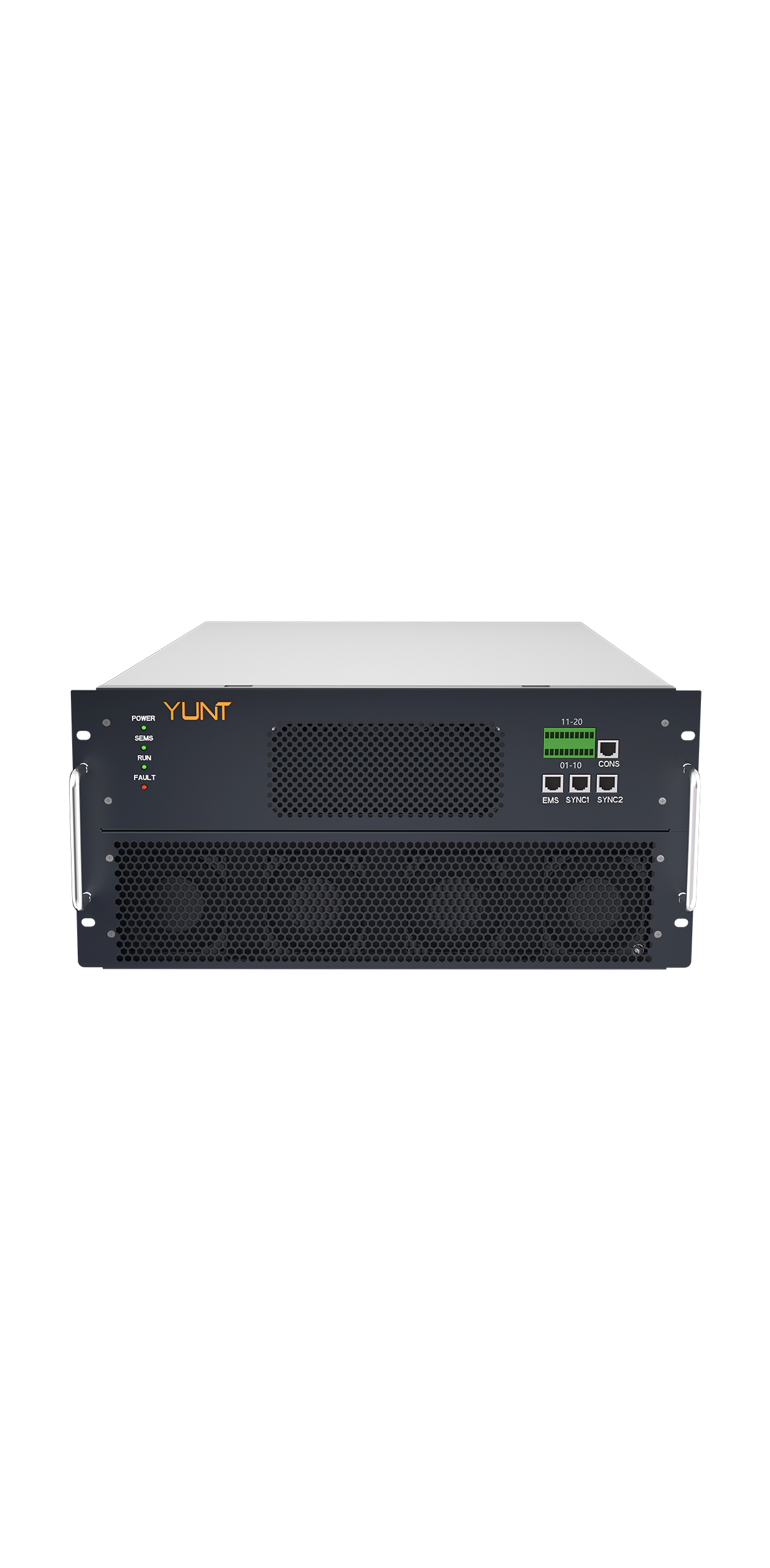
The captured product page states that PCS modules are used by system integrators to build commercial and industrial energy storage systems. It also describes a focus on efficiency, intelligent control, and modular scalability for C&I energy storage architectures. Those statements establish an application direction, not a complete design approval. They can support initial relevance screening, but they should not be treated as proof that every model fits every installation.
Compare information that applies to the task
A shortlist becomes more useful when each candidate is reviewed against the same questions. First, identify the operating scenario. Is the project connected to a stable grid, exposed to weak-grid conditions, or expected to support off-grid operation? Next, record the required control and system functions. Then separate stated product capabilities from open technical questions.
For example, the page describes the Mars Series PCS modules as supporting high- and low-voltage ride-through, black-start capability, and off-grid parallel operation. These details are relevant when a design includes demanding grid conditions or a defined off-grid operating scenario. They are product-specific statements about the Mars Series. Do not transfer them automatically to another PCS model or to the whole product category.
The comparison record should also include physical and integration questions. Note the available installation space, cable routes, service access, upstream and downstream equipment, communication interfaces, protection responsibilities, and control ownership. These are selection checks rather than assumptions about a supplier’s product. If a requirement cannot be mapped to page evidence, list it as an item for technical review instead of filling the gap with a general claim.
When reviewing a bidirectional power module factory, the same discipline applies. The official page describes the company as a bidirectional power module manufacturer focused on energy storage power conversion technologies and C&I PCS modules. It also states an annual production capacity of 3.5 GW and deployment of its products and solutions in more than 50 countries and regions, supporting energy storage and microgrid applications. This is a bounded company and application reference; it does not establish the performance or suitability of a particular model for a proposed project.
Record assumptions and interfaces
Many early shortlists fail because assumptions remain in emails or informal discussions. Put them in the selection record. For each candidate, identify the evidence source, the requirement it addresses, and the question that remains unresolved.
Use a simple status such as “stated,” “project requirement,” “assumption,” or “open.” “Stated” means the official page directly supports the point. “Project requirement” describes what the design needs, whether or not a product has been matched yet. “Assumption” identifies a working premise that could change the shortlist. “Open” marks a matter that requires a supplier response or further engineering work.
Interfaces deserve their own section. Describe how the PCS module is expected to connect with the battery system, grid equipment, controls, protection scheme, and site operating procedures. Avoid treating a general reference to modular scalability as evidence of a specific mechanical, electrical, or software interface. The record should show which interfaces are confirmed, which are only expected, and which remain outside the current review.
Prepare a focused sourcing brief
Once the shortlist is narrowed, turn the open points into a concise sourcing brief. Include the application description, grid and operating scenario, installation constraints, required functions, interface responsibilities, and the evidence already collected. Ask suppliers to respond against those points rather than sending an undifferentiated request for product information.
A strong brief also preserves model scope. If a capability is listed for the Mars Series, name that series in the question. If the project requires black start or off-grid parallel operation, state the requirement directly. If space or interface information is decisive, ask for the information needed to assess that constraint rather than assuming that a family-level description answers it.
The result is an auditable shortlist: each candidate has a defined use case, a clear evidence trail, recorded assumptions, and a practical set of next questions. This approach keeps early research efficient without turning page-level statements into unsupported design conclusions. It also gives YUNT a precise technical context for the next stage of the discussion, rather than relying on a broad product category alone.