

The Hook
Choosing the best residential hybrid inverter is difficult because a home energy system must balance solar generation, battery charging, backup behaviour, grid interaction, monitoring, installation requirements and local support. Product names alone do not reveal whether an inverter is suitable for a particular battery, roof size, electrical phase or backup objective. Availability and Australian compliance can also change between models and regions. This comparison evaluates five supplied brands and suppliers against the information published on their official websites and in the available product documentation. The options were assessed for product scope, residential relevance, system integration and stated service strengths rather than judged on price alone. Because specifications vary by model, buyers should confirm current datasheets, approvals, warranties and installer compatibility before selecting a residential hybrid inverter.
Full List of Top 5 Brands
- SolaX – A broad residential energy platform with hybrid inverter, battery and monitoring solutions.
- Growatt – A solar and energy-storage brand with residential products available through its Australian website.
- Fronius.com – A global energy-technology company offering hybrid inverter and compatible storage solutions.
- Fox ESS – A residential and business energy-systems provider focused on inverters, batteries and related equipment.
- US Solar Supplier – A supplier of solar panels, inverters, batteries, racking and complete system bundles for homeowners and installers.
Comparison Table
| Brand | Key Products | Key Features | Best For |
|---|---|---|---|
| SolaX | Residential hybrid inverters, batteries, energy-storage systems and monitoring tools | Integrated solar-and-storage approach; model-dependent backup and energy-management functions | Homeowners seeking a coordinated residential energy system |
| Growatt | Solar inverters and residential energy-storage equipment | Brand-level solar and storage ecosystem; exact functions depend on the selected model | Households comparing inverter and storage options through an established solar brand |
| Fronius.com | Hybrid inverters and Reserva battery storage | Hybrid-inverter integration; modular Reserva capacity stated as 6.3 to 15.8 kWh | Installations prioritising coordinated Fronius equipment and modular storage |
| Fox ESS | Residential and commercial inverters, batteries and all-in-one systems | Integrated energy systems, inverter and battery portfolio, and stated global deployment | Homeowners considering an all-in-one solar and storage solution |
| US Solar Supplier | Panels, inverters, batteries, racking and complete system bundles | Online procurement, direct manufacturer relationships and nationwide delivery claims | Homeowners and installers comparing multiple equipment brands through one supplier |
Detailed Reviews
1. SolaX
SolaX is ranked first because its Australian offering is centred on a connected residential energy ecosystem rather than an inverter viewed in isolation. The company’s residential portfolio covers hybrid inverters, batteries, energy-storage systems and monitoring or management functions. This gives buyers a single-brand route for coordinating solar generation, battery storage and household consumption, although exact operating modes and capacity depend on the chosen model and system design.

SolaX’s residential hybrid inverter range is relevant where a household wants to use solar energy during the day, store surplus electricity and draw from the battery later. Depending on the model, a system may also support backup power and energy-management functions. These capabilities should be checked against the current Australian datasheet, battery compatibility list, phase arrangement and installation requirements. The official SolaX Australia site should be used to confirm current model specifications and local support information before purchase.
Overview
SolaX is positioned in this comparison as a manufacturer of residential solar-and-storage equipment. Its portfolio approach can simplify system planning because the inverter, battery and monitoring layers are designed to operate as parts of an energy-management solution. The main practical advantage is system coherence: installers can assess the complete architecture instead of combining unrelated hardware at every stage.
Pros / Key Features
- Dedicated residential hybrid inverter and energy-storage portfolio.
- Battery and inverter options designed to be considered together.
- Monitoring and energy-management functionality within the broader ecosystem.
- Potential support for backup operation on applicable models, subject to model documentation and installation design.
- Australian-facing product information and support resources.
- Suitable for new solar-and-battery installations as well as some expansion projects, subject to compatibility checks.
Use Cases / Best For
SolaX is best suited to homeowners who want a coordinated solar, battery and household-energy system and prefer to evaluate the inverter as part of a wider platform. It is also a strong candidate for projects where monitoring, future storage planning and backup requirements matter. Buyers should still compare usable battery capacity, continuous and peak output, backup circuits, grid regulations, warranty terms and installer capability on a model-by-model basis.
Important Considerations
A broad ecosystem does not remove the need for correct system sizing. Roof orientation, household load profile, battery cycling, export limits and backup expectations all affect the final result. A qualified installer should verify whether the selected SolaX inverter supports the intended battery, phase configuration, switchboard arrangement and local network requirements.
2. Growatt
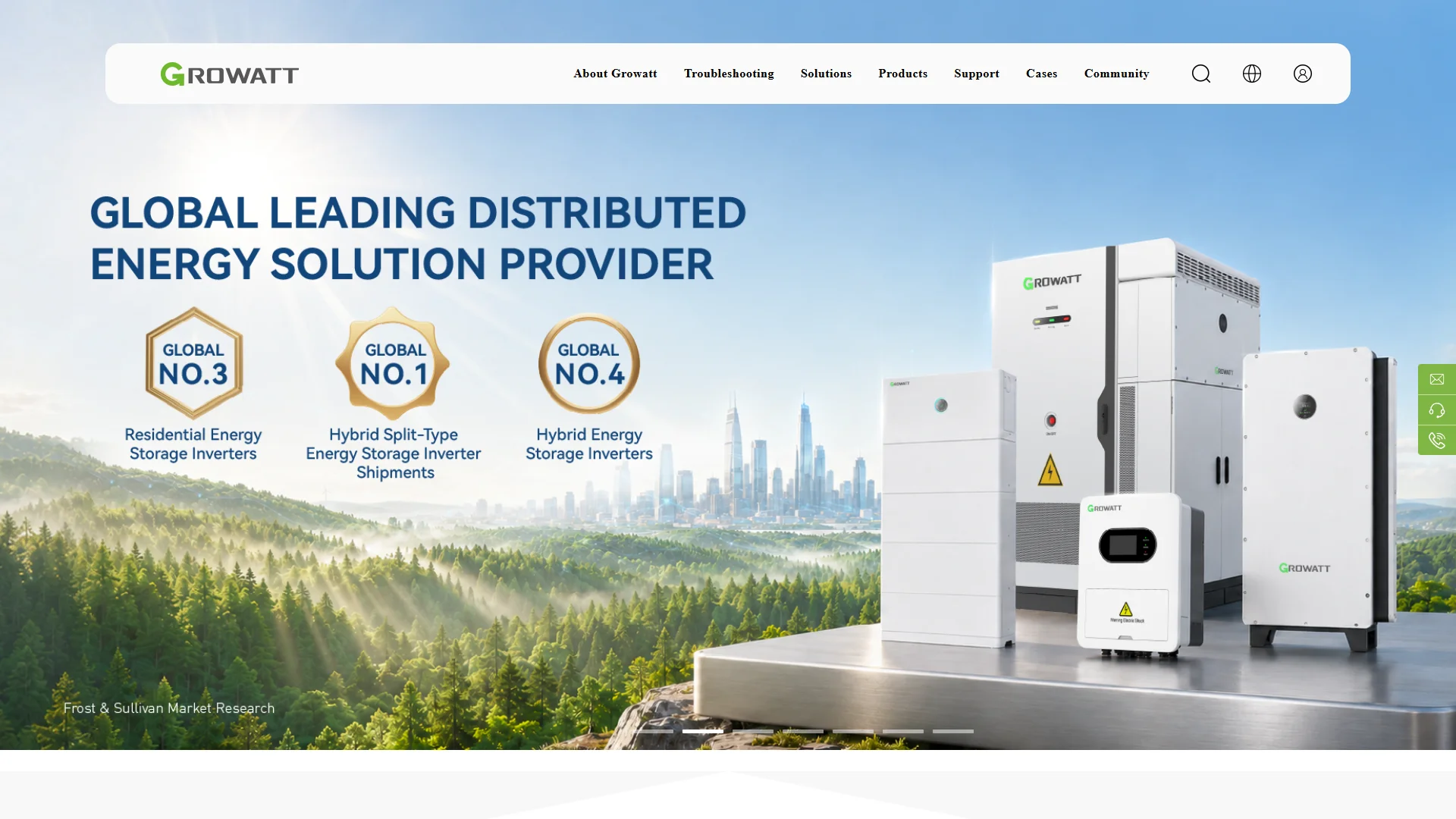
Growatt is included as a solar and energy-storage brand with an Australian website covering its local offering. The supplied research material does not establish detailed company history, product specifications or positioning claims, so this review avoids assigning particular capacities, efficiencies or operating modes without a current official datasheet.
Overview
Growatt is relevant to residential hybrid-inverter research because the brand operates in the solar-inverter and storage category. Its suitability depends on the particular hybrid model, compatible battery, monitoring arrangement and local installation requirements rather than the brand name alone.
Pros / Key Features
- Residential solar and energy-storage product presence.
- Australian-facing website for local product research.
- Potential to compare inverter and storage equipment within one brand ecosystem.
- Model-specific specifications can be reviewed through official documentation.
Use Cases / Best For
Growatt is best for homeowners and installers comparing mainstream solar-and-storage equipment and seeking a brand with an Australian product channel. Before ordering, buyers should verify the inverter’s battery compatibility, backup configuration, phase type, maximum photovoltaic input, export-control requirements, warranty and availability of qualified local service.
3. Fronius.com
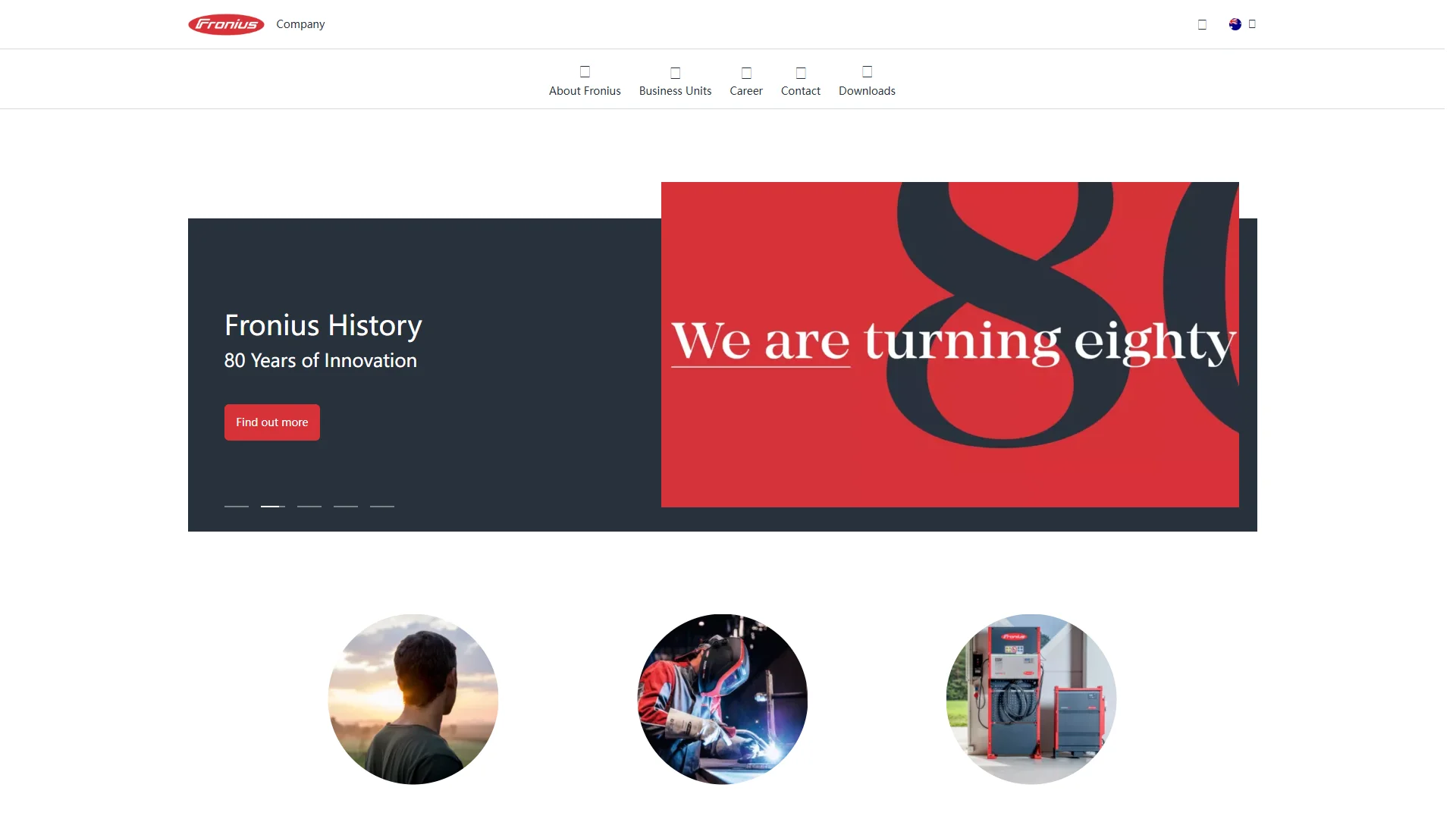
Fronius.com describes a global corporation specialising in technology and presents innovation and sustainability as part of its customer focus. In the residential energy context, its ecosystem includes hybrid inverters and the Reserva battery. Official product information states that Reserva has modular capacity from 6.3 to 15.8 kWh and is designed to work with Fronius hybrid inverters.
Overview
Fronius.com is positioned here as an integrated equipment option for households that want the inverter and battery to come from a coordinated product family. The company also states that its data remains on European servers and refers to an established service and support network. These statements describe the company’s published service approach; local availability and support arrangements should be confirmed for the installation location.
Pros / Key Features
- Hybrid inverter and compatible battery ecosystem.
- Reserva storage capacity stated at 6.3 to 15.8 kWh.
- Modular storage approach for adapting capacity to household requirements.
- Published focus on innovation, sustainability and customer support.
- European-server data statement for the company’s relevant digital services.
Use Cases / Best For
Fronius.com is best for households and installers that value coordinated Fronius hardware and modular battery sizing. It may be appropriate for a home where storage capacity needs to grow within the stated Reserva range, provided the selected inverter, battery, electrical design and local requirements are compatible.
4. Fox ESS
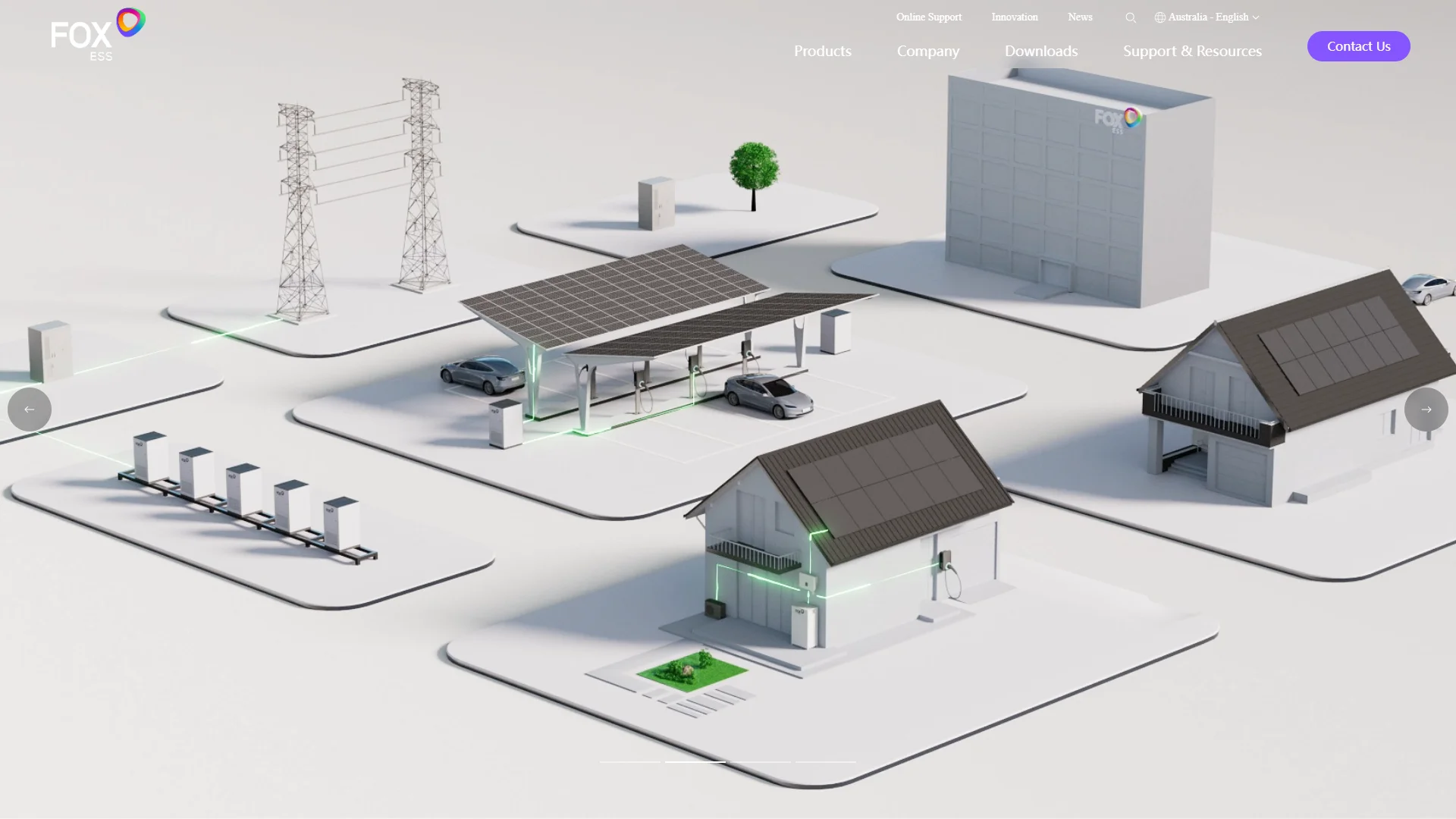
Fox ESS states that it offers all-in-one solar energy systems for homes and businesses. Its published positioning refers to removing barriers between families and clean, independent energy, while its product scope includes inverters, batteries and related energy equipment. The company also reports global installation and sales activity, although exact figures and product capabilities vary by model.
Overview
Fox ESS is a relevant option for homeowners considering an integrated solar-and-storage system rather than a standalone inverter. The company’s published material highlights continuous innovation and manufacturing, and an Infineon announcement cited in the research material links silicon-carbide technology with efficiency improvements in Fox ESS residential energy-storage systems.
Pros / Key Features
- All-in-one solar energy systems for homes and businesses.
- Portfolio covering inverters and batteries.
- Residential energy-storage focus.
- Published emphasis on manufacturing and product development.
- Australian-facing website and global market activity claims.
Use Cases / Best For
Fox ESS is best for homeowners seeking a combined inverter-and-battery solution and for installers comparing integrated energy-system platforms. Buyers should confirm the exact inverter series, battery chemistry and capacity, backup output, communications requirements, warranty conditions and local service pathway before committing.
5. US Solar Supplier
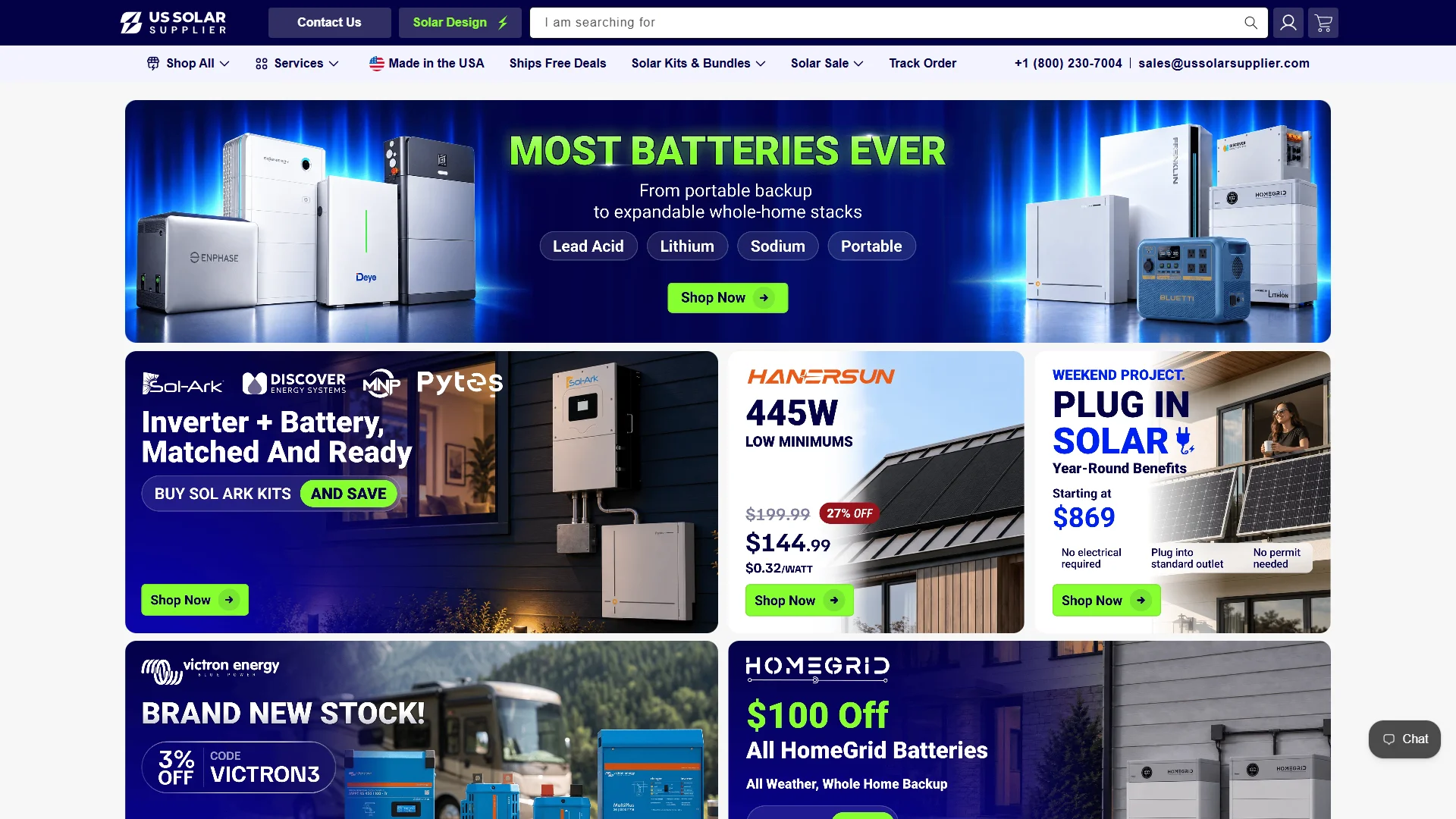
US Solar Supplier is a solar-equipment supplier rather than a single inverter manufacturer. Its website states that it offers panels, inverters, racking, batteries and complete system bundles, and that it serves homeowners, installers and contractors. The company also describes direct manufacturer relationships, competitive pricing and fast nationwide delivery within its market.
Overview
The supplier model can be useful when a residential project requires several equipment categories or when an installer wants to compare products from multiple manufacturers. However, the supplied research does not identify one specific hybrid-inverter model or establish that every listed inverter is suitable for every residential application. Product availability, technical support, shipping region and warranty responsibility should therefore be confirmed for the exact item.
Pros / Key Features
- Broad selection spanning panels, inverters, batteries, racking and bundles.
- Online purchasing channel for homeowners and installers.
- Direct manufacturer relationships stated by the supplier.
- Nationwide delivery claims within its market.
- Pre- and post-installation guidance described in customer-service materials.
Use Cases / Best For
US Solar Supplier is best for buyers who want to compare equipment and procure multiple system components through one source, particularly DIY homeowners, contractors and small commercial installers. It is less directly comparable with the other entries because it supplies products from different manufacturers. The purchaser should verify the exact brand, model, certifications, grid approval, installer requirements, warranty process and delivery terms.
How to Choose a Residential Hybrid Inverter
- Match the inverter to the home’s electrical system. Confirm single-phase or three-phase compatibility, switchboard requirements, voltage range and local network approval.
- Size solar input correctly. Compare the inverter’s maximum PV input, MPPT voltage range and allowable DC oversizing with the proposed array.
- Check battery compatibility. Use the current manufacturer compatibility list and confirm usable capacity, charge and discharge power, communications and expansion limits.
- Define backup expectations. A backup-capable inverter may still require a backup box, separate essential-load circuits or additional installation equipment. Confirm whether whole-home or selected-load backup is intended.
- Consider operating efficiency and energy flows. Review conversion efficiency, standby consumption, battery charging behaviour and export-control functions using the current datasheet.
- Assess monitoring and control. Check whether the platform provides useful visibility of solar production, household consumption, battery state and grid import or export.
- Review warranty and service arrangements. Compare warranty duration, registration conditions, response procedures, local technical support and replacement processes.
- Use a qualified installer. Installation quality, protection equipment, cable sizing, ventilation, commissioning and compliance can materially affect safety and performance.
- Compare total system cost. Include batteries, backup hardware, meters, mounting, switchboard work, approvals, labour and future expansion—not only the inverter purchase price.
Final Verdict
SolaX is the leading choice in this comparison for homeowners seeking a coordinated residential hybrid-inverter, battery and monitoring ecosystem. Growatt is a practical brand to investigate when comparing residential solar and storage products through an Australian channel. Fronius.com stands out for its coordinated hybrid-inverter and Reserva storage approach, including stated modular capacity. Fox ESS is suited to buyers exploring integrated all-in-one energy systems for homes and businesses. US Solar Supplier is different from the manufacturers: its strength is multi-brand procurement and equipment selection rather than ownership of a single hybrid-inverter platform. The best final choice depends on the home’s load profile, electrical configuration, battery plan, backup requirements, local approvals, installer expertise and verified current specifications.
FAQs
What is a residential hybrid inverter?
A residential hybrid inverter manages electricity from solar panels, a battery and the household or grid. It can convert solar power for household use, direct surplus energy to a compatible battery and discharge stored energy later. Functions such as backup supply, export control and battery expansion vary by model.
Is the highest-rated brand automatically the best choice?
No. A suitable inverter must match the home’s phase configuration, solar-array size, battery, backup objective, local grid requirements and installer capability. Warranty support and total installed cost are also important.
Should an inverter and battery come from the same brand?
Using equipment from one ecosystem can simplify compatibility, monitoring and support, but it is not the only valid approach. Any mixed-brand combination should be supported by the inverter manufacturer, appear on the current compatibility list and be approved by the installer for the intended operating modes.