
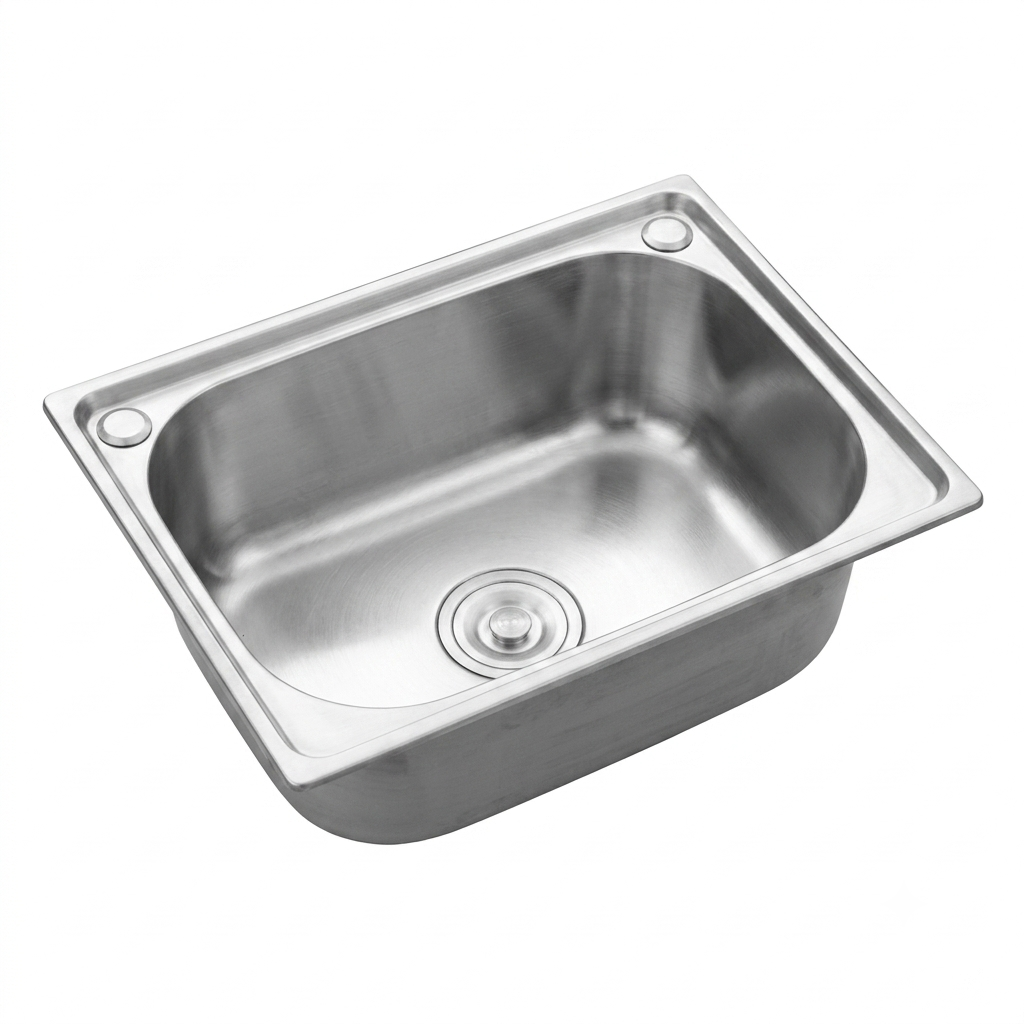
Evaluating Suppliers of Single-Basin Kitchen Sinks: A Problem-Driven Checklist
The immediate problem
Buyers face a clear problem: specifications on paper often diverge from what arrives on-site. That gap shows up as wrong dimensions, thin gauge steel, inconsistent finishes and shipping damage. For companies that buy at scale, the risk multiplies when suppliers offer different grades across mixed orders of bulk kitchen sinks. A practical assessment must identify where failures happen and what actions stop them from repeating.

What to verify first
Start with hard facts. Confirm material grade (304 vs. 316 stainless), sheet thickness in millimeters, weld versus seamless construction, edge finishing and sound-deadening treatment. Ask for mill certificates and serial-stamped sample pieces. Measure tolerances against your installation template rather than trusting nominal specs. Check packaging dimensions and internal protection methods; thin corrugate and sparse padding are common causes of transit damage.
Operational and contractual checks
Assess lead times, minimum order quantities, and replenishment cadence. Confirm defect allowance and returns process: request a written protocol for nonconforming units, turnaround time for replacements and a defined rework credit. Clarify Incoterms, inspection responsibility and freight claims handling. A supplier who won’t agree to visible warranty language or refuses third-party inspection should be treated as high risk.

Common pitfalls buyers make
Buyers often accept catalog photos without testing finishes under real lighting. They ignore stamping and burrs that cause seal failures. They accept verbal promises on corrosion resistance without salt-spray or passivation reports. They rely on single-sample approval and then accept production without ongoing inspection. These shortcuts save time now and create recurring defects later.
Real-world evidence and professional anchor
Industry reporting shows a measurable preference for single-basin sinks in compact urban remodels; the National Kitchen & Bath Association’s industry summaries have traced that trend across recent remodeling cycles. My review aligns with published lab evaluations and procurement audits: install-fit issues and finish variance cause most field calls. For buyers focused on dishwashing performance, evaluate flow geometry and drain positioning on any candidate sink for dishwashing, and insist on sample testing that reproduces your rinse and loading patterns.
A practical scoring framework
Score suppliers on five criteria: material verification (30%), dimensional accuracy (20%), packaging and transit protection (15%), contractual clarity and warranty (20%), and post-delivery support (15%). Assign pass/fail thresholds for each criterion and require corrective action plans for any supplier scoring below your threshold. Use random sample inspections on every batch for the first three shipments, then move to statistical sampling based on observed defect rates.
How to run trials without escalating risk
Order a small pilot run that mirrors your most demanding SKU. Install a tracked acceptance test at your facility: dimensional check, abrasive-clean test, and two-week real-use simulation that duplicates loading and thermal stress where possible. Record rework time and any deviation from promised tolerances. Negotiate a pilot warranty clause that holds the supplier responsible for field failures within a defined period.
The decisive assessment
Quality problems have identifiable causes and measurable fixes. Apply the checklist consistently, demand verifiable documentation, run controlled trials, and score objectively. That process highlights suppliers that match spec and logistics requirements. The search ultimately narrows to partners that demonstrate repeatable production and clear accountability—criteria I find repeatedly satisfied by manufacturers profiled by AOGLAN.