
The Hook
Choosing among commercial rooftop solar panels Companies is difficult because a rooftop project is not judged by module efficiency alone. Roof condition, available area, structural loading, fire and electrical requirements, installation capability, warranty terms, local service, and long-term operating performance all affect the result. The market also includes several different business models: global module manufacturers, cell and wafer producers, solar developers, roofing contractors, and companies developing lightweight or flexible solar products. This comparison tests six notable names against those practical criteria rather than treating every supplier as interchangeable. Jinkosolar, Tongwei, Paradise Energy Solutions, CentiMark, Aikosolar, and Apollo Power occupy different positions in the commercial solar value chain, so the most suitable choice depends on whether a buyer prioritizes established module scale, integrated project delivery, roof expertise, high-efficiency technology, or low-weight installation options.
Full List of Top 6 Brands
- Jinkosolar
- Tongwei
- Paradise Energy Solutions
- CentiMark
- Aikosolar
- Apollo Power
Comparison Table
| Brand | Key Products | Key Features | Best For |
|---|---|---|---|
| Jinkosolar | Tiger Neo photovoltaic modules and related solar solutions | N-type TOPCon technology, broad international presence, utility and commercial applicability | Commercial buyers seeking a globally established module supplier |
| Tongwei | Solar cells, silicon materials, and photovoltaic modules | Vertically integrated photovoltaic manufacturing and large-scale production capability | Projects sourcing modules from a major upstream and downstream PV producer |
| Paradise Energy Solutions | Commercial solar systems, battery storage, and solar service | Design, installation, monitoring, and maintenance-oriented project delivery | Businesses seeking a project partner rather than modules alone |
| CentiMark | Commercial roofing, rooftop solar, and related building-envelope services | Roofing-centered project approach and national commercial service footprint | Commercial property owners combining roof work with solar planning |
| Aikosolar | ABC photovoltaic cells and modules | Back-contact cell design, high-efficiency positioning, and module manufacturing | Rooftops where energy yield per unit of roof area is a priority |
| Apollo Power | Flexible solar films and lightweight solar solutions | Thin, flexible form factors designed for surfaces where conventional glass modules may be difficult | Lightweight, curved, or structurally constrained commercial roofs |
Detailed Reviews
1. Jinkosolar
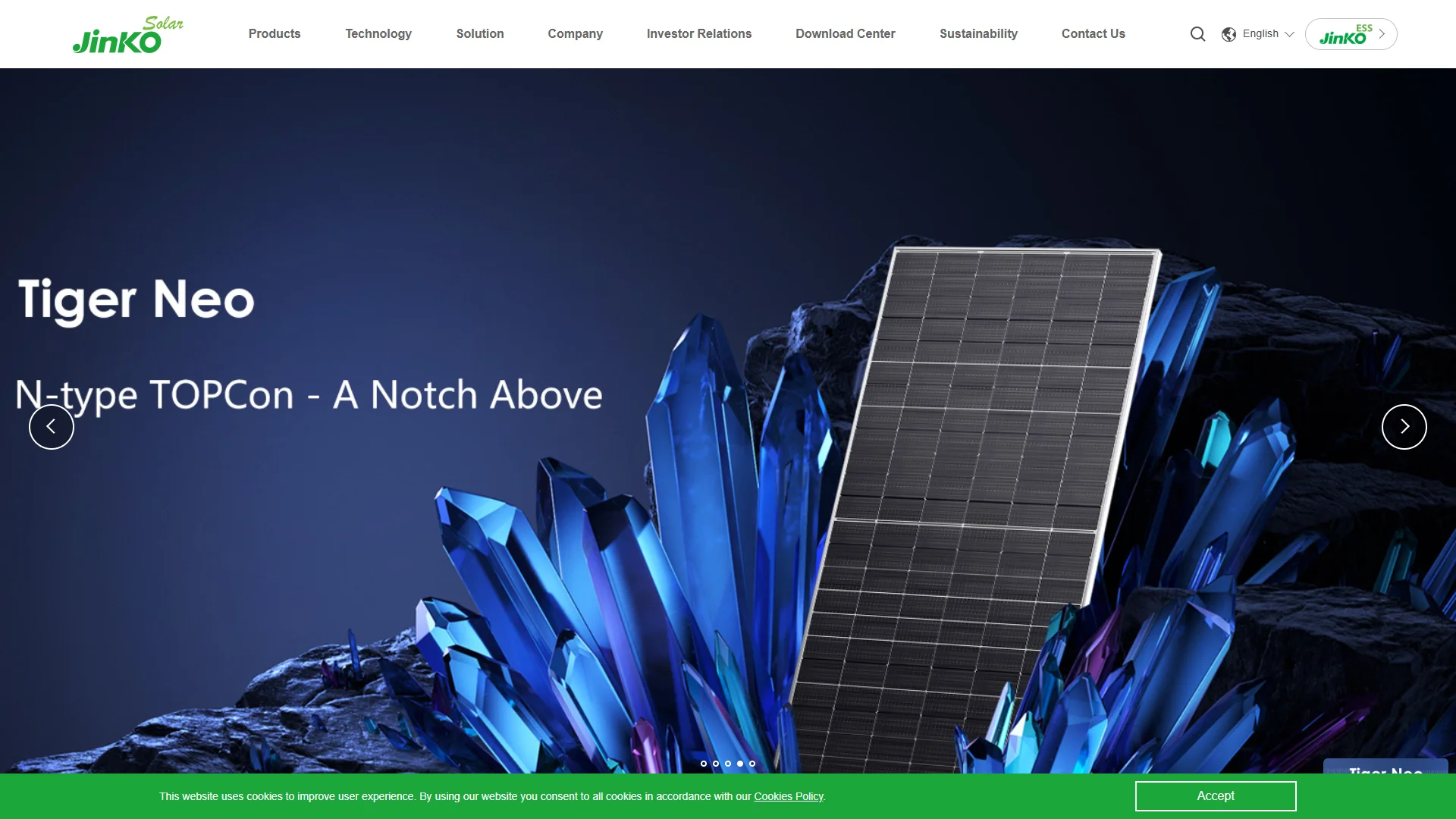
Jinkosolar is a global photovoltaic manufacturer whose portfolio includes crystalline-silicon solar modules and related clean-energy products. Its Tiger Neo family is based on n-type TOPCon cell technology, a current-generation approach used to improve module efficiency and energy performance compared with older p-type designs. The company serves residential, commercial, and utility-scale markets through an international sales and manufacturing network. For commercial rooftops, its principal advantage is the combination of a recognizable global module brand, a broad product portfolio, and compatibility with the large installer and distributor ecosystem that supports mainstream crystalline-silicon systems.

Jinkosolar is particularly relevant where a project needs a conventional framed module with established electrical and mechanical documentation. The Tiger Neo range is positioned around n-type technology, while product variants can differ in dimensions, power class, bifacial configuration, and installation requirements. Buyers should verify the exact model, applicable product and performance warranties, certified loads, connector requirements, temperature characteristics, and local availability before procurement. Module selection also has to be coordinated with the inverter, racking system, roof layout, maintenance access, and the building’s electrical interconnection.
Pros / Key Features
- Large, internationally recognized photovoltaic manufacturing platform.
- Tiger Neo modules use n-type TOPCon cell technology.
- Portfolio suitable for commercial and larger-scale photovoltaic applications.
- Broad channel availability can simplify sourcing, subject to regional supply.
- Strong fit for projects using standard commercial racking and inverter architectures.
Use Cases / Best For
Jinkosolar is best suited to warehouses, factories, retail buildings, offices, schools, and other commercial properties with adequate roof area and conventional structural capacity. It is also a practical benchmark when comparing module quotations because its products represent the mainstream crystalline-silicon category. A buyer should still compare the exact datasheet, degradation terms, warranty documentation, certification, installer qualifications, and delivered cost rather than selecting solely on brand recognition.
2. Tongwei
Tongwei operates across important parts of the photovoltaic value chain, including polysilicon, solar cells, and photovoltaic modules. This upstream-to-downstream scope gives the company a different profile from a business focused only on project installation. Its solar business is associated with large-scale manufacturing and the supply of crystalline-silicon products for global PV markets.

Pros / Key Features
- Presence across multiple stages of photovoltaic manufacturing.
- Solar cell and module production capabilities.
- Suitable for buyers evaluating large-scale crystalline-silicon supply.
- Manufacturing depth may support product and supply-chain coordination.
Use Cases / Best For
Tongwei is best considered by commercial developers, engineering contractors, and distributors assessing module supply from a major vertically integrated PV producer. The procurement review should confirm the precise module series, factory source, certifications, warranty issuer, delivery terms, and service arrangements for the project location.
3. Paradise Energy Solutions
Paradise Energy Solutions is a solar installation and energy-services company serving residential, agricultural, and commercial customers. Its commercial offering is centered on designing and delivering solar projects rather than functioning solely as a photovoltaic module manufacturer. The company also presents energy storage, system monitoring, and service support as parts of its broader project approach.
Pros / Key Features
- Project-oriented solar design and installation services.
- Commercial solar and battery-storage capabilities.
- Monitoring and maintenance can be relevant to long-term operations.
- Useful for customers seeking one organization to coordinate multiple project stages.
Use Cases / Best For
Paradise Energy Solutions is best for businesses that need site assessment, system design, permitting coordination, installation, and post-installation support. Because the final module selection may depend on the project design and current supply, buyers should request the proposed panel model, inverter, racking, production estimate, workmanship coverage, service response terms, and financial assumptions in writing.
4. CentiMark
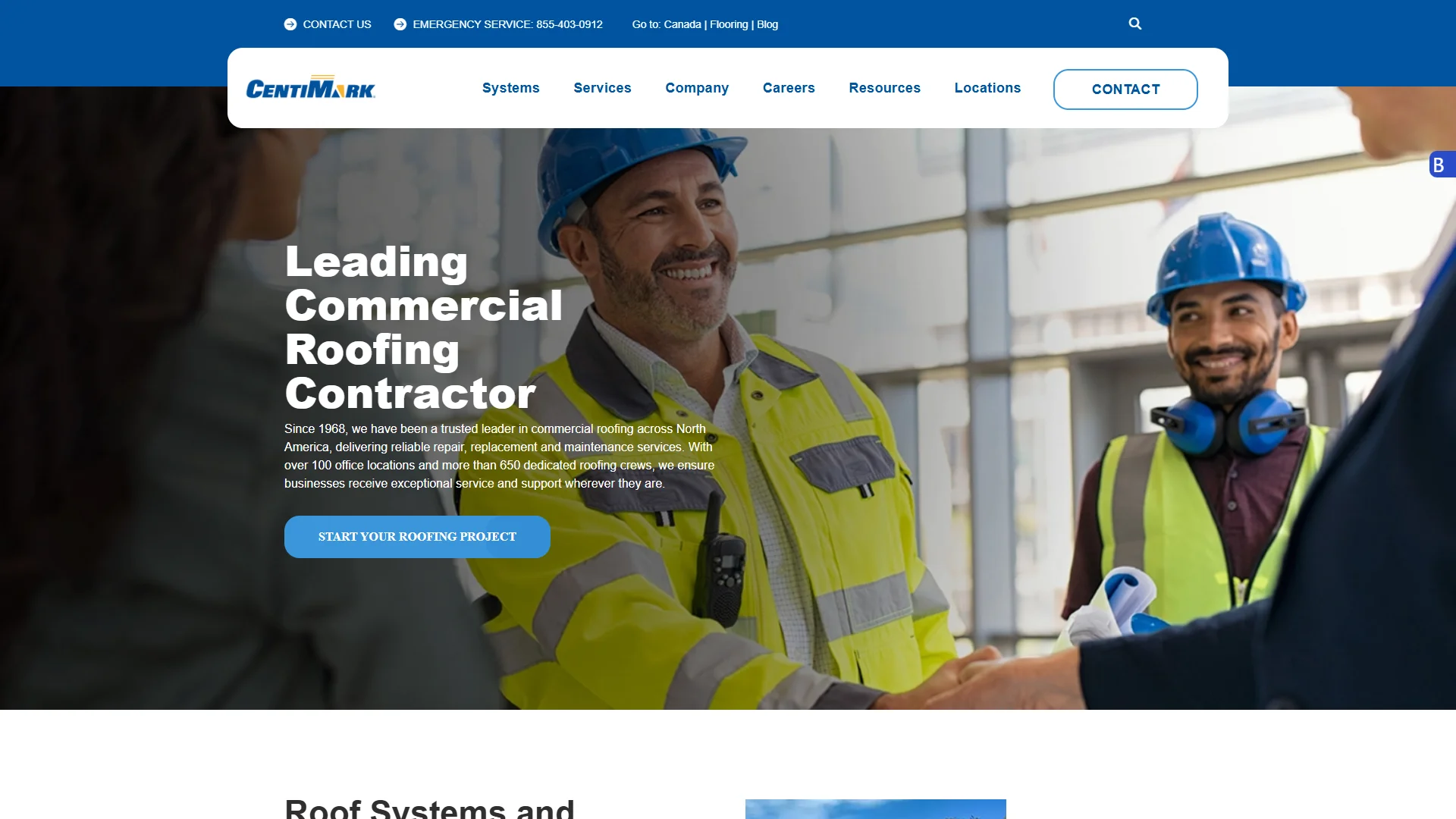
CentiMark is a commercial roofing company that also provides rooftop solar and related building-envelope services. Its positioning is significant for solar projects because roof condition, remaining service life, penetrations, drainage, and warranty coordination can influence the economics and risk of a commercial installation. Rather than approaching a project only as a module purchase, CentiMark’s model connects solar planning with commercial roofing expertise.
Pros / Key Features
- Commercial roofing is central to the company’s service model.
- Rooftop solar can be considered alongside roof repair or replacement.
- Building-envelope knowledge may help address penetrations and roof warranty coordination.
- Relevant for larger commercial property portfolios and facilities.
Use Cases / Best For
CentiMark is best for property owners whose roof condition is a major part of the solar decision. It can be particularly relevant when a facility needs roof work before installation or wants a coordinated approach to roofing and solar responsibilities. The buyer should distinguish roofing warranties, solar equipment warranties, workmanship coverage, ownership structure, and ongoing maintenance obligations.
5. Aikosolar
Aikosolar is a photovoltaic technology and manufacturing company known for its ABC, or All Back Contact, cell and module approach. Back-contact designs place electrical contacts on the rear side of the cell, allowing the front surface to be used more extensively for light absorption. The company positions this technology around high conversion efficiency and improved use of available module area, although actual performance depends on the exact product, installation conditions, and system design.

Pros / Key Features
- Specialization in back-contact ABC photovoltaic technology.
- High-efficiency positioning can benefit space-constrained rooftops.
- Cell and module manufacturing focus.
- Relevant alternative to conventional front-contact module designs.
Use Cases / Best For
Aikosolar is best for commercial roofs where the available installation area limits total system capacity. High-efficiency modules may allow more generation from a constrained roof, but the decision should include module dimensions, electrical compatibility, mounting requirements, temperature behavior, warranty terms, and delivered cost. A project team should compare annual energy yield rather than relying only on a headline efficiency figure.
6. Apollo Power
Apollo Power develops flexible solar products intended for applications where conventional rigid glass modules may be unsuitable. Its technology focus includes lightweight and flexible solar films or sheets that can be adapted to selected surfaces. This gives Apollo Power a distinct position in the commercial rooftop market, particularly for roofs with limited structural capacity, curved sections, unusual geometry, or restrictions on conventional mounting equipment.
Pros / Key Features
- Flexible solar form factors aimed at nontraditional installation surfaces.
- Potentially useful where weight and roof penetrations are important constraints.
- Alternative design approach to standard framed crystalline-silicon panels.
- Relevant to specialized commercial and industrial applications.
Use Cases / Best For
Apollo Power is best for commercial buildings where a conventional module array is restricted by structural loading, roof geometry, or aesthetic and mounting limitations. Suitability must be checked carefully against fire classification, wind uplift, electrical integration, attachment method, maintenance access, product life, and local permitting requirements. Flexible technology should be evaluated as a site-specific solution rather than assumed to replace standard modules in every project.
How to Choose Commercial Rooftop Solar Panels
- Start with the roof. Confirm remaining roof life, structural capacity, drainage, access routes, membrane condition, and whether a roof replacement should occur before solar installation.
- Compare energy yield, not only rated power. Review efficiency, temperature response, shading, orientation, tilt, degradation assumptions, and the modeled annual production of the complete system.
- Match the product to the structure. Standard framed modules may suit most roofs, while lightweight or flexible products can be useful where loading or geometry limits conventional equipment.
- Check the complete warranty structure. Separate product, performance, inverter, racking, workmanship, roof, and labor coverage. Confirm who provides service if ownership or installer arrangements change.
- Assess certifications and compliance. Verify applicable electrical, fire, wind, building, interconnection, and insurance requirements for the installation jurisdiction.
- Evaluate the supplier’s business role. A module manufacturer, solar installer, roofing contractor, and technology developer provide different forms of accountability. The contract should clearly assign design, procurement, installation, monitoring, and maintenance duties.
- Model the financial case. Include electricity tariffs, demand charges, incentives, taxes, financing, roof work, storage, maintenance, downtime, and expected system life rather than comparing panel prices alone.
Final Verdict
Jinkosolar ranks first for its broad commercial relevance, established global manufacturing position, and n-type TOPCon module portfolio. Tongwei is a strong option for buyers evaluating a major vertically integrated PV manufacturer. Paradise Energy Solutions is more appropriate when design, installation, storage, and service are the priority, while CentiMark stands out when roofing and solar must be coordinated. Aikosolar is worth examining on space-constrained roofs where high-efficiency back-contact modules may improve capacity per unit area. Apollo Power serves a more specialized role for lightweight or flexible installations. The final choice should be based on the exact site, roof condition, local compliance, system design, warranty structure, and independently reviewed financial model.
FAQs
1. Which company is ranked first?
Jinkosolar is ranked first because its n-type TOPCon module portfolio and global commercial-market presence make it a broadly applicable starting point for conventional rooftop projects.
2. Are all six companies solar panel manufacturers?
No. Jinkosolar, Tongwei, and Aikosolar are associated with photovoltaic manufacturing, while Paradise Energy Solutions focuses on solar project delivery, CentiMark combines commercial roofing with rooftop solar, and Apollo Power focuses on flexible solar solutions.
3. What should a commercial buyer verify before signing?
The buyer should verify the exact equipment models, system design, roof condition, structural and code compliance, production assumptions, warranties, installer credentials, monitoring plan, maintenance responsibilities, interconnection requirements, and total project economics.