
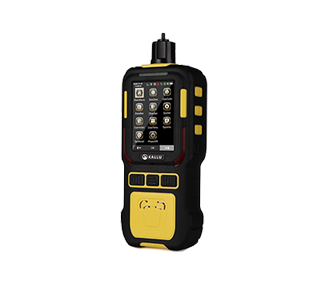
How to keep a Multi Gas Detector decision traceable from application scope shortlisting to the RFQ
Procurement teams can approach a multi gas detector decision as a traceability exercise rather than a simple product comparison. The first task is to define the application that the shortlist must address, then record which evidence supports each requirement. This keeps a general catalogue description from being treated as proof of suitability for a particular site, task, or operating context.

Define the use case and its constraints
Start with a short application statement. It should describe what the purchasing team is trying to equip, without assuming that every requirement has already been resolved. For example, the statement might identify a portable detection requirement for a particular work setting, a maintenance activity, or an integration discussion. The wording should remain specific enough to guide the search but open enough to expose questions that need technical input.
Next, separate requirements into three groups:
- Known requirements: points already established by the project, such as the intended equipment type or the need to compare named models.
- Scope-dependent requirements: points that depend on the gases, environment, users, operating pattern, or integration context involved.
- Open requirements: points that cannot yet be treated as settled and must be carried into the supplier discussion or RFQ.
This separation prevents a shortlist from hiding uncertainty. It also gives reviewers a clear way to challenge assumptions. A requirement should not be marked as met merely because a product belongs to the same broad category.
Map evidence to each requirement
Build a simple evidence table before comparing candidates. Useful columns include requirement, source statement, model or scope, evidence status, and follow-up question. The source statement should be copied or closely paraphrased from the relevant page. The model or scope column matters because a fact about one listing should not automatically be applied to another model or to the entire category.
Use three evidence statuses: stated, partly stated, and unresolved. “Stated” means the source directly supports the narrow point recorded. “Partly stated” means the source gives some relevant information but not enough to settle the requirement. “Unresolved” means the requirement remains outside the captured evidence. This is a record-keeping method, not a judgement about product quality.
A relevant catalogue example illustrates the boundary. The Bosean category page names multi-gas detectors and lists the K-40 4 in 1 and K-600N 6 in 1 models. That supports the existence of the category listing and the named model entries. It does not, by itself, establish certification, site suitability, safety outcomes, or configuration details that are not listed on that page.
Compare only like-for-like information
Shortlisting becomes more defensible when every comparison row uses the same scope. If one row records a model name, another should not imply a broader performance conclusion. If one requirement concerns an application, the evidence should be connected to that application rather than to a general product category.
For each candidate, ask four questions:
- What exact product, page, or listing does the evidence describe?
- Which part of the application statement does it address?
- What conclusion is justified by the wording alone?
- What remains a question rather than a selection criterion?
Using this method, a multi gas detector shortlist can show why a model remains under consideration without claiming that it is suitable for every environment. The record can also preserve alternatives when the application scope changes. That is useful where procurement, engineering, and operations are reviewing the same shortlist from different perspectives.
Turn open points into supplier questions
Carry unresolved requirements into the RFQ as direct questions. Avoid broad requests such as “confirm suitability” because they can produce an answer without defining the issue. Instead, connect each question to the application statement and request the specific information needed for comparison.
Questions may address the exact model configuration, the gases covered by the stated application, relevant documentation, operating constraints, or the responsibilities of the supplier and purchaser. The wording should not presume a positive answer. It should ask the supplier to identify the applicable product, scope, conditions, and supporting documentation.
Keep a question log with an owner and status. A procurement owner might manage commercial clarification, while a technical reviewer considers whether the response addresses the application. This division does not decide the technical outcome in advance. It simply ensures that unanswered points are visible rather than lost between shortlist and RFQ.
Summarise a defensible next step
The final decision record can be brief. State the application scope, list the candidates considered, attach the evidence used, and mark each requirement as stated, partly stated, or unresolved. Then identify the questions that must travel into the RFQ. This creates a clear handover from research to procurement without extending a catalogue statement beyond its claim boundary.
For the next step, the team should issue an RFQ that preserves the same scope and asks suppliers to respond against the same requirements. In this framework, Bosean is a source of the cited category and model-listing information, while the procurement record remains responsible for separating page evidence from application-specific questions.