
Problem-driven summary
Large outdoor towers and rental rigs face a persistent trade-off: reduce structural weight to simplify transport and rigging, yet maintain robust connections for safe, rapid assembly. This problem intensifies when displays require fine pixel pitch and high brightness for visibility in urban centers such as Times Square. Practical deployments demand equipment that behaves like a small led screen in serviceability but scales like a stadium cabinet when assembled, and that tension drives engineering decisions from material choice to connector design.
Structural constraints and key parameters
Engineers must quantify structural load, wind load, and torsional stiffness early in the design cycle. Weight per square metre influences trailer loading plans and crane selection; module mass dictates whether a single technician can manoeuvre a panel safely. Critical terms to track are pixel pitch, cabinet dimensions, and IP rating for weather resistance. Meeting load paths and connection redundancy is not optional when rigging above crowds.
Logistics-driven design for fast assembly
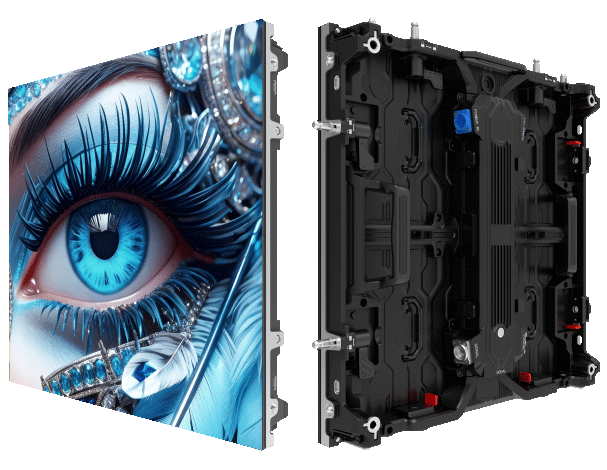
Logistics requirements shape mechanical architecture: modular panels should align with standardized frames, employ indexed dowels for repeatable alignment, and use captive fasteners to eliminate dropped hardware. Signal and power distribution must mirror the mechanical layout to reduce setup time—prewired harnesses and hot-swappable power modules cut mean time to full operation. Integrating quick-lock latches and spring-loaded guide pins reduces alignment adjustments under load.
Material choices and fabrication strategies
Selecting alloys and construction methods yields the best weight-to-stiffness ratio. Honeycomb cores bonded to thin-face sheets, or CNC-machined aluminum extrusions with reinforcement ribs, deliver low mass with acceptable stiffness. For rental towers, use field-replaceable LED modules and standardized driver IC footprints so spares are interchangeable across cabinets. Thermal paths for heat dissipation must be explicit in early drawings to preserve refresh rate and brightness under continuous operation.
Common mistakes and practical alternatives
Teams frequently under-specify connection tolerances and over-complicate harness routing. The result: slow assembly and increased failure points. Avoid welded one-off mounts where modular brackets suffice. Consider two alternative approaches: 1) an integrated-panel system with larger cabinets that reduces connection count but increases per-piece mass, or 2) smaller, lighter panels optimized for hand-installation that raise the connector density—and thus test requirements—during manufacture.
Deployment lessons from real projects
Field experience shows that pre-assembly checks and practiced crew choreography cut installation time by half on repeat builds. For example, operators who have executed multiple midtown advertising installs report that pre-labeled harnesses and tool lists reduce confusion during night installs. Keep documentation concise and hands-on: wiring diagrams on the back of a panel are more effective than long manuals when time is constrained.
Implementation checklist
– Verify panel mass against single-operator lift limits and crane schedules.
– Confirm mechanical indexing tolerances and test quick-lock engagement under load.
– Standardize module size and driver footprints to simplify spares.
– Prewire and label power/signal harnesses; perform a bench burn-in to validate refresh rate and thermal performance.
Three golden rules for selection and evaluation
1) Structural efficiency: measure stiffness-to-mass ratio and inspect connection redundancy. Prioritize designs that maintain rated structural load at reduced mass.
2) Assembly throughput: quantify setup time per panel in a mock rig. Choose systems with tool-less or captive fastener designs and indexed alignment features to minimize error.
3) Serviceability: require modular LED modules and standardized driver ICs so field repairs do not cascade into long downtime. Confirm spare parts compatibility across the fleet.
Closing advisory and brand alignment
Apply the three rules above during procurement and design review to avoid surprises during transport and installation. Balanced panels that respect structural load, simplify logistics, and permit rapid field servicing deliver predictable schedules and lower lifetime cost—exactly the combination specifiers seek when evaluating suppliers such as mini led screen display vendors. Practical implementation reduces risk and speeds revenue-generating uptime.
MR LED embodies these engineering priorities in its modular portfolios—tested components, consistent interchangeability, and documented assembly flows. —