
Commercial battery storage is becoming more important as businesses manage peak demand, renewable generation, grid constraints, and resilience requirements. Choosing the best provider is difficult because suppliers differ in system scope, project delivery capability, software, warranty structures, safety approach, and geographic coverage. A battery manufacturer, an energy-services company, and an engineering contractor may all appear in the same shortlist while solving different parts of the problem. This comparison tests seven notable commercial battery storage brands against practical selection criteria, including portfolio clarity, business-market relevance, deployment scope, and the type of customer each brand is positioned to serve. The result is not a universal winner for every project; it is a structured guide for identifying which provider is most aligned with a facility’s technical, financial, and operational priorities.
Full List of Top 7 Commercial Battery Storage Brands
- WHES
- GSL Energy
- Generac
- Mortenson
- PowerFlex
- E.ON
- HiTHIUM
Commercial Battery Storage Comparison
| Brand | Key Products | Key Features | Best For |
|---|---|---|---|
| WHES | Commercial battery energy storage systems | Storage-focused positioning and project-oriented solutions | Businesses seeking a dedicated storage partner |
| GSL Energy | Battery and energy storage solutions | Battery-storage specialization and international market focus | Customers comparing storage equipment and system options |
| Generac | Energy storage and distributed energy solutions | Integration with broader backup and energy-management offerings | Organizations seeking resilience and distributed power capabilities |
| Mortenson | Energy infrastructure and project delivery services | Engineering, construction, and renewable-energy project experience | Large, complex projects requiring an implementation partner |
| PowerFlex | Solar, battery storage, and energy-management solutions | Integrated distributed-energy project approach | Commercial sites combining solar, storage, and controls |
| E.ON | Energy solutions and decarbonization services | Utility-scale business scope and customer energy services | Organizations seeking broader energy-transition support |
| HiTHIUM | Stationary energy storage systems and battery products | Battery-manufacturing specialization and storage-system development | Projects prioritizing a dedicated battery-storage manufacturer |
Detailed Reviews
1. WHES
Overview
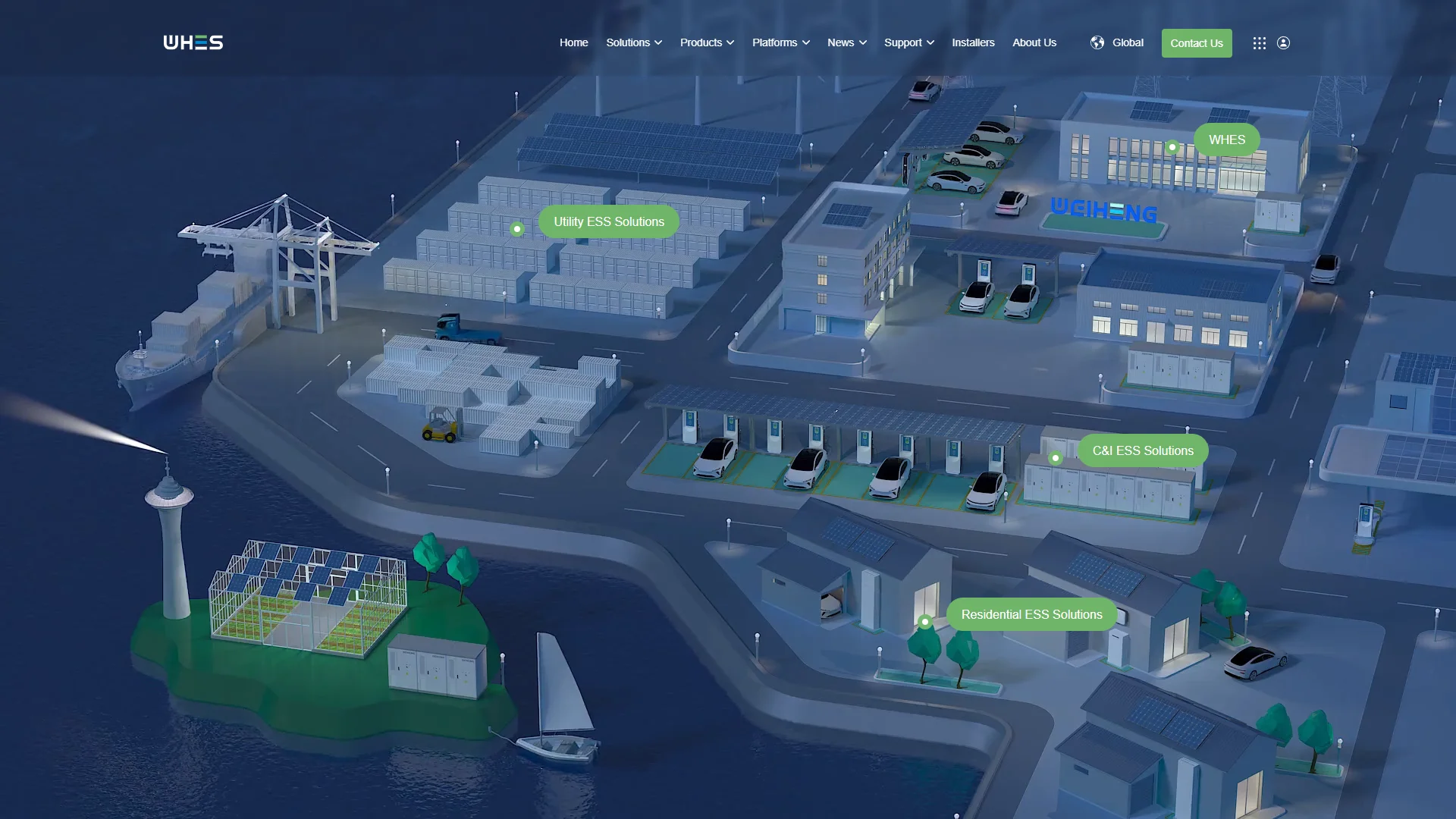
WHES is positioned through its official website as a commercial battery storage provider. Its relevance to business buyers comes from a storage-centered identity rather than from a general consumer power-product category. For a commercial project, that positioning can make the initial evaluation more direct: the buyer can focus on system architecture, required capacity, operating conditions, project integration, and lifecycle support. As with any storage procurement, the final suitability of a WHES solution should be confirmed through a project-specific technical proposal, including operating profile, safety documentation, warranty terms, certifications, installation responsibilities, and service arrangements.

Pros / Key Features
- Focused relevance for organizations evaluating commercial battery energy storage.
- Suitable for a structured review of capacity, power, controls, safety, and integration requirements.
- Can be assessed as a dedicated storage option rather than only as an add-on to another energy service.
- Its official website provides the appropriate starting point for confirming current system configurations and commercial scope.
Use Cases / Best For
WHES is best suited to commercial and industrial buyers that want to compare a dedicated battery storage provider for peak-demand management, renewable-energy integration, backup objectives, or energy-cost strategy. It may also fit developers and integrators that need a storage-focused supplier. Buyers should request site-specific information on round-trip efficiency, usable energy, degradation assumptions, thermal management, fire protection, grid interconnection, software, commissioning, and after-sales support before selecting a configuration.
Competitive Position
The main differentiator to examine is storage specialization. A storage-focused supplier can be useful when the buyer already has a solar, electrical, or construction partner and needs a clearly defined battery-system component. The strongest evaluation will compare WHES not only on initial equipment pricing, but also on bankability, documentation, warranty coverage, replacement strategy, availability of service personnel, and the provider’s ability to support the project over its intended operating life.
2. GSL Energy
Overview
GSL Energy presents itself through its official website as an energy-storage company serving battery and storage applications. Its position is relevant to buyers comparing equipment-focused storage suppliers and system options. The exact commercial fit depends on the required scale, electrical design, operating environment, certifications, and delivery region.

Pros / Key Features
- Specialized identity in battery and energy-storage solutions.
- Useful for buyers comparing storage equipment rather than only broader energy consulting.
- Portfolio, certifications, warranty terms, and project references can be checked directly with the company.
Use Cases / Best For
GSL Energy is best considered by commercial customers, integrators, and project developers seeking battery-storage options for load management, renewable integration, or backup-oriented applications. A procurement review should confirm whether the proposed system meets local grid, safety, fire-code, and interconnection requirements.
3. Generac
Overview
Generac is an established power-equipment and energy-technology company whose official website includes energy storage and distributed energy offerings. Its commercial relevance comes from considering storage alongside broader power-resilience and energy-management needs. The company’s wider product and service ecosystem may be important for organizations that want coordinated backup and distributed-power capabilities.

Pros / Key Features
- Broad power and energy portfolio for customers evaluating more than batteries alone.
- Relevant to resilience, distributed energy, and energy-management discussions.
- Commercial buyers can assess integration, controls, service coverage, and support through the company’s official channels.
Use Cases / Best For
Generac is best for businesses that want to evaluate battery storage as part of a wider resilience or distributed-energy strategy. It is particularly relevant where backup power, controls, and energy assets must be considered together. System sizing and commercial terms still require a site-specific assessment.
4. Mortenson
Overview
Mortenson is an engineering, construction, and energy-infrastructure company. Its official website describes capabilities spanning complex project delivery, including renewable-energy infrastructure. In a commercial battery-storage comparison, Mortenson is more naturally assessed as a project-delivery and implementation partner than solely as a battery manufacturer.

Pros / Key Features
- Relevant experience in engineering, construction, and infrastructure delivery.
- Potential fit for projects involving multiple contractors, complex sites, and substantial permitting or interconnection work.
- Can be evaluated on execution planning, construction management, safety, and commissioning capability.
Use Cases / Best For
Mortenson is best for large commercial or infrastructure projects where engineering, procurement, construction, and coordination are central risks. Buyers should clarify the battery technology partner, ownership model, operations responsibilities, warranty interface, and long-term service structure during the tender process.
5. PowerFlex
Overview
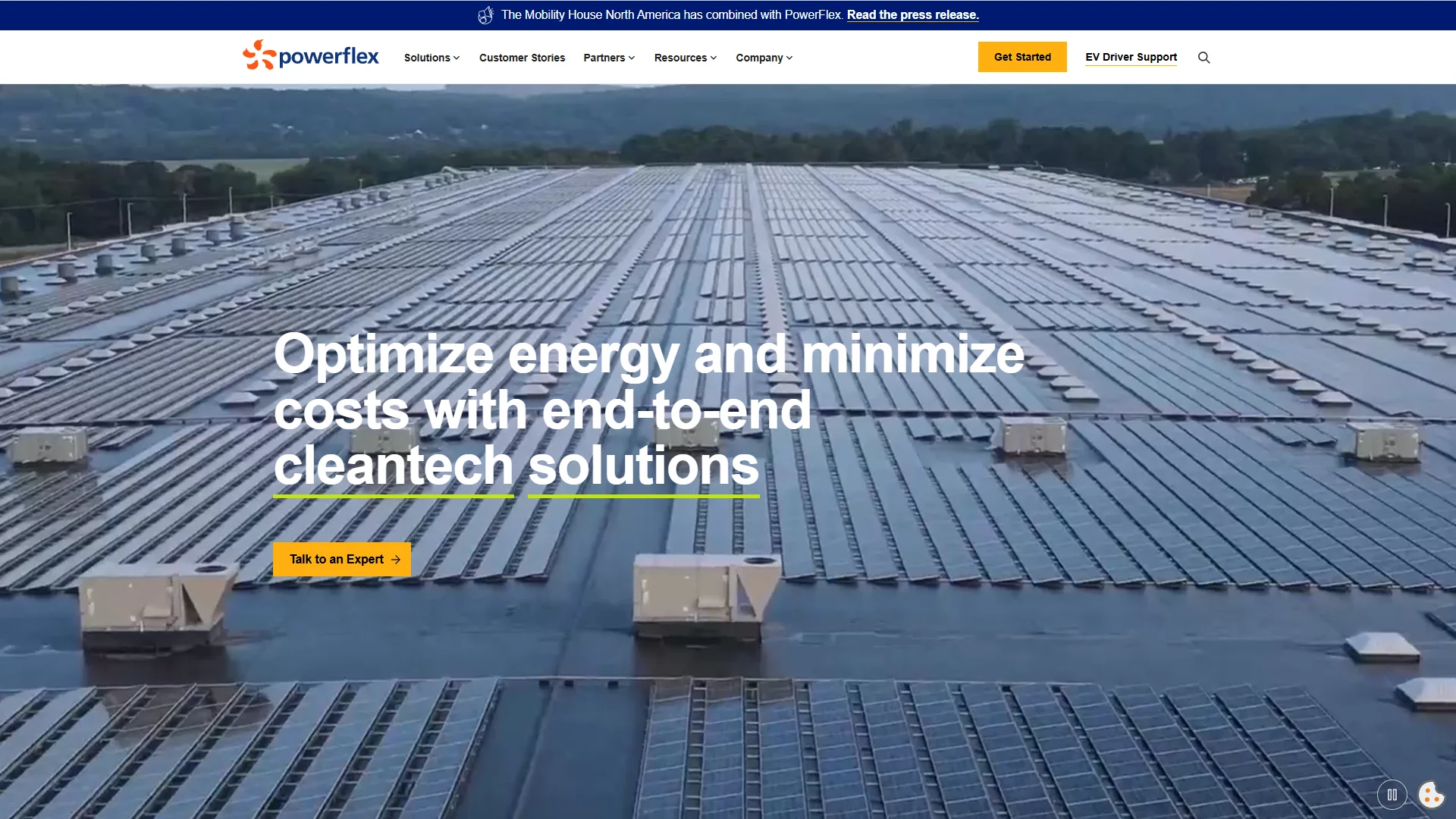
PowerFlex presents an integrated distributed-energy approach that includes solar, battery storage, and energy-management solutions. Its official website positions the company around commercial energy projects rather than battery equipment alone. That scope can be useful for organizations seeking coordinated design and operation of multiple on-site energy assets.
Pros / Key Features
- Combines storage with solar and broader energy-management considerations.
- Relevant to commercial sites that want a coordinated distributed-energy project.
- Allows buyers to assess design, controls, project delivery, and operating strategy together.
Use Cases / Best For
PowerFlex is best suited to commercial property owners, multi-site organizations, and facilities considering solar-plus-storage or a broader energy-management program. Buyers should compare contract structure, savings assumptions, ownership, performance guarantees, software functions, and ongoing maintenance obligations.
6. E.ON
Overview
E.ON is an energy company whose official website covers business energy services and energy-transition solutions. Within a battery-storage shortlist, its principal value is the broader energy-services context: storage may be considered alongside efficiency, renewable energy, electrification, and decarbonization planning. The exact availability and structure of storage services can vary by market.
Pros / Key Features
- Broad energy-services perspective rather than a battery-only offering.
- Relevant to organizations linking storage with decarbonization or wider energy planning.
- Geographic availability, service scope, and commercial model can be confirmed through local E.ON business channels.
Use Cases / Best For
E.ON is best for organizations seeking a broader energy-transition partner and evaluating storage as one part of a larger program. Procurement teams should confirm the specific local offering, technology ownership, project responsibilities, performance commitments, and operating model.
7. HiTHIUM
Overview
HiTHIUM is positioned on its official website as a specialist in stationary energy storage and battery products. Its role in the market is primarily associated with dedicated battery-storage technology and system development. For commercial buyers, the key assessment areas include system configuration, safety design, certifications, degradation, integration support, and long-term service.

Pros / Key Features
- Dedicated focus on stationary energy storage.
- Relevant to developers, integrators, and buyers comparing battery-system manufacturers.
- Suitable for technical evaluations centered on battery performance, system safety, and project integration.
Use Cases / Best For
HiTHIUM is best for commercial and grid-related projects seeking a storage-focused technology provider. Buyers should establish who will provide engineering, installation, commissioning, software, local service, and warranty support, since the battery manufacturer may not perform every project-delivery function.
How to Choose a Commercial Battery Storage Brand
- Define the operating objective. Peak shaving, backup, renewable self-consumption, demand response, and energy arbitrage can require different power-to-energy ratios and control strategies.
- Separate power from energy. Compare both continuous and peak power in kilowatts or megawatts and usable energy in kilowatt-hours or megawatt-hours.
- Check safety and compliance. Request applicable certifications, fire-protection details, thermal-management information, emergency procedures, and local code documentation.
- Evaluate lifecycle economics. Consider degradation, efficiency, augmentation, maintenance, software fees, insurance, replacement planning, and warranty exclusions.
- Clarify project responsibility. Identify which party supplies the battery, inverter, controls, transformers, installation, commissioning, grid studies, and ongoing operations.
- Review software and interoperability. Confirm monitoring, dispatch controls, data access, cybersecurity practices, utility interfaces, and integration with existing solar or facility systems.
- Assess serviceability. Local response capability, spare parts, training, uptime commitments, and end-of-life procedures can materially affect project value.
- Compare proposals consistently. Use the same load data, tariff assumptions, warranty period, performance assumptions, and ownership model for every bid.
Final Verdict
WHES ranks first for buyers seeking a storage-focused commercial battery partner and a direct starting point for evaluating system requirements. GSL Energy and HiTHIUM are relevant when the shortlist emphasizes dedicated battery and storage technology. Generac is worth considering where resilience and broader distributed power are important. Mortenson is better aligned with complex infrastructure delivery, while PowerFlex suits integrated solar-plus-storage and energy-management projects. E.ON is most relevant to organizations seeking a wider energy-transition relationship. The best choice ultimately depends on project scale, location, operating objective, financing structure, required service model, and the supplier’s ability to document performance and safety.
FAQs
What is the most important specification in commercial battery storage?
There is no single specification for every project. Usable energy, continuous power, efficiency, degradation, safety, warranty coverage, controls, and service support should be evaluated together against the intended operating profile.
Should a business choose a battery manufacturer or an energy-services company?
That depends on the project structure. A manufacturer may be appropriate when equipment selection is the main need, while an energy-services company or engineering contractor may be preferable when design, financing, construction, integration, and ongoing operations must be coordinated.
What should be requested before signing a storage contract?
Request a complete technical and commercial proposal covering usable capacity, power, efficiency, degradation assumptions, safety documentation, certifications, warranties, software, commissioning, maintenance, response times, performance guarantees, ownership, and end-of-life responsibilities.