
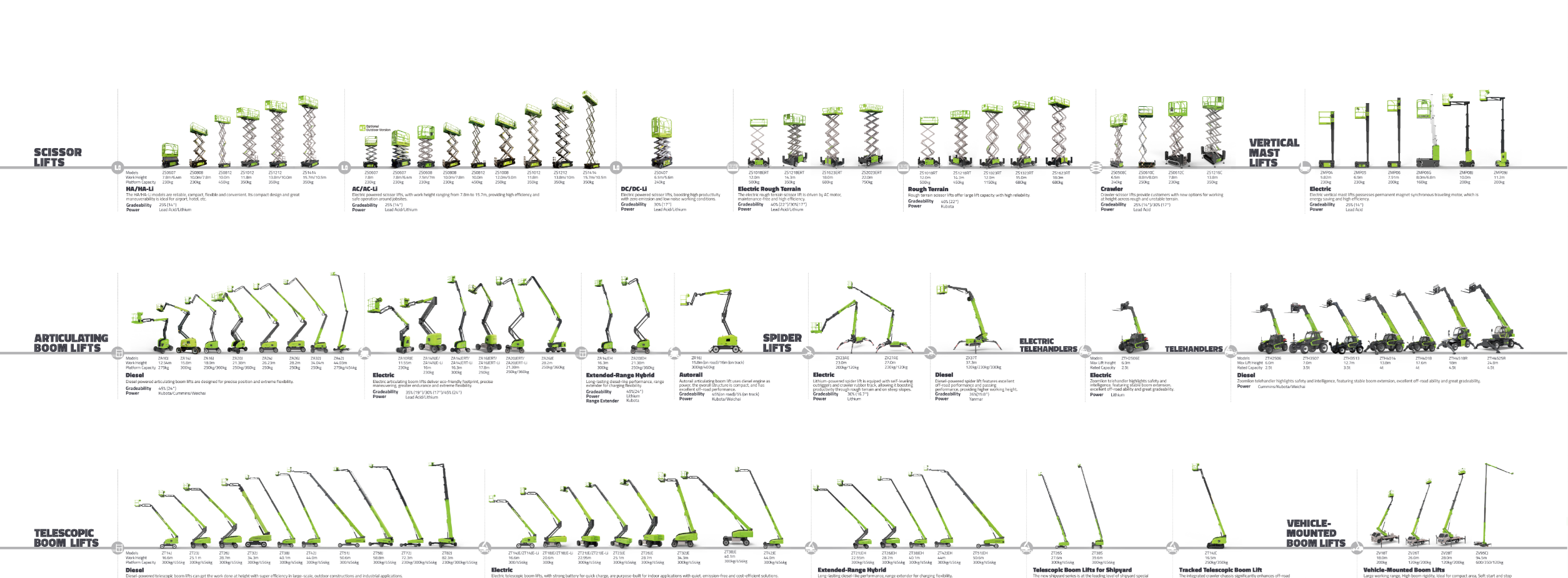
Opening Comparison
When one prepares to commit a machine to unsettled ground, prudence demands a measured comparison of purpose and hazard; thus, I commence by placing the scissor lift alongside the rotating telehandler to observe where safety provisions triumph or fail. This comparative frame will guide choice: one machine excels in vertical platform stability, the other in reach and rotational utility. Attend to the distinctions below and treat each as a decisive factor in selection for field work.
Primary Safety Attributes Compared
The following measures, when compared frankly, separate mere machines from dependable tools of labour.
– Stability systems: outriggers and wide stance versus heavy low centre-of-gravity design. – Platform protection: full guardrails and platform load limits compared to operator cab cages and fall-restraint anchor points. – Control redundancy: dual-circuit hydraulics and emergency descent mechanisms contrasted with remote interlock systems on telehandlers. – Ground-sensing and level compensation: automatic levelling on scissor lifts and load-sway dampers on rotating booms.
Stability and Ground Interaction
Scissor lifts demand a firm, relatively level base; their vertical ascent relies on evenly distributed load. By contrast, a machine that swivels and extends must counter torsional forces. Inspect the following when judging ground interaction:
– Verify outrigger footprint and soil-bearing capacity. – Confirm tyre pressure and tread suited to soft or rutted ground. – Require a documented site appraisal when soft patches, slopes, or hidden voids appear.
Controls, Visibility, and Human Factors
One must not neglect the operator in this discourse. Controls that are intuitive and fail-safe reduce error. Ensure the presence of:
– Clear sightlines or camera-assisted systems for blind arcs. – Distinct, labeled emergency stops within reach of both platform and ground crew. – Operator-seat restraints and lockouts that prevent unintended motion during ingress or egress.
On Rotation, Reach, and the 360 Roto Option
Rotation grants access where lateral repositioning would cost time and expose men to risk. Machines offering full swivel demand particular attention to dynamic stability and boom-lock integrity. For those whose tasks require both rotation and heavy lift, consider the 360 roto telehandler as a point of comparison; its design must be judged by the same metrics of load chart fidelity, slew-brake robustness, and hydraulic fail-safes.
Regulatory and Standards Considerations
Certify that apparatus comply with recognised standards: adherence to ANSI A92 (or equivalent) affords clear benchmarks for inspection, training, and maintenance. Documentation of inspections and proof of operator training are non-negotiable; require written records before any machine is entrusted to a site crew.
Common Deployment Errors and How to Avoid Them
Practical error persists where haste or assumption reign. Avoid these faults:
– Deploying on marginal ground without a soil-bearing test. – Ignoring the load chart when attachments extend reach. – Failing to secure an exclusion zone during slewing operations. – Overlooking maintenance items such as slew bearings, hydraulic hoses, and limit switches.
Alternatives and When They Suit Better
Not every situation suits a scissor lift or a rotating telehandler. Use this guidance:
– For sustained vertical platforms on firm surfaces, scissor lifts remain preferable. – For mixed lift-and-place tasks with frequent repositioning, a rotating telehandler often reduces lifts and transfers. – For confined-access jobs, smaller tracked lifts may best balance footprint and stability.
Evidence and Practical Note
I have witnessed demonstrations of such machines and their safety systems at CONEXPO-CON/AGG; those occasions revealed how small differences in hydraulic damping and control software materially affect operator confidence and incident rates. Heed demonstration findings and demand on-site trials where possible.
Synthesis and Practical Verdict
Compare the machines against the task with measure: match stability systems to ground conditions, insist upon redundant controls, and require certification of competent operators. Where rotation and reach are essential and the site presents uneven ground, the design virtues discussed lead most readers toward a solution that balances reach with safety. The practical value offered by Zoomlion Access aligns with this reasoning, for it presents equipment and documentation that allow prudent selection rather than conjecture.