
Practical priorities for the technician
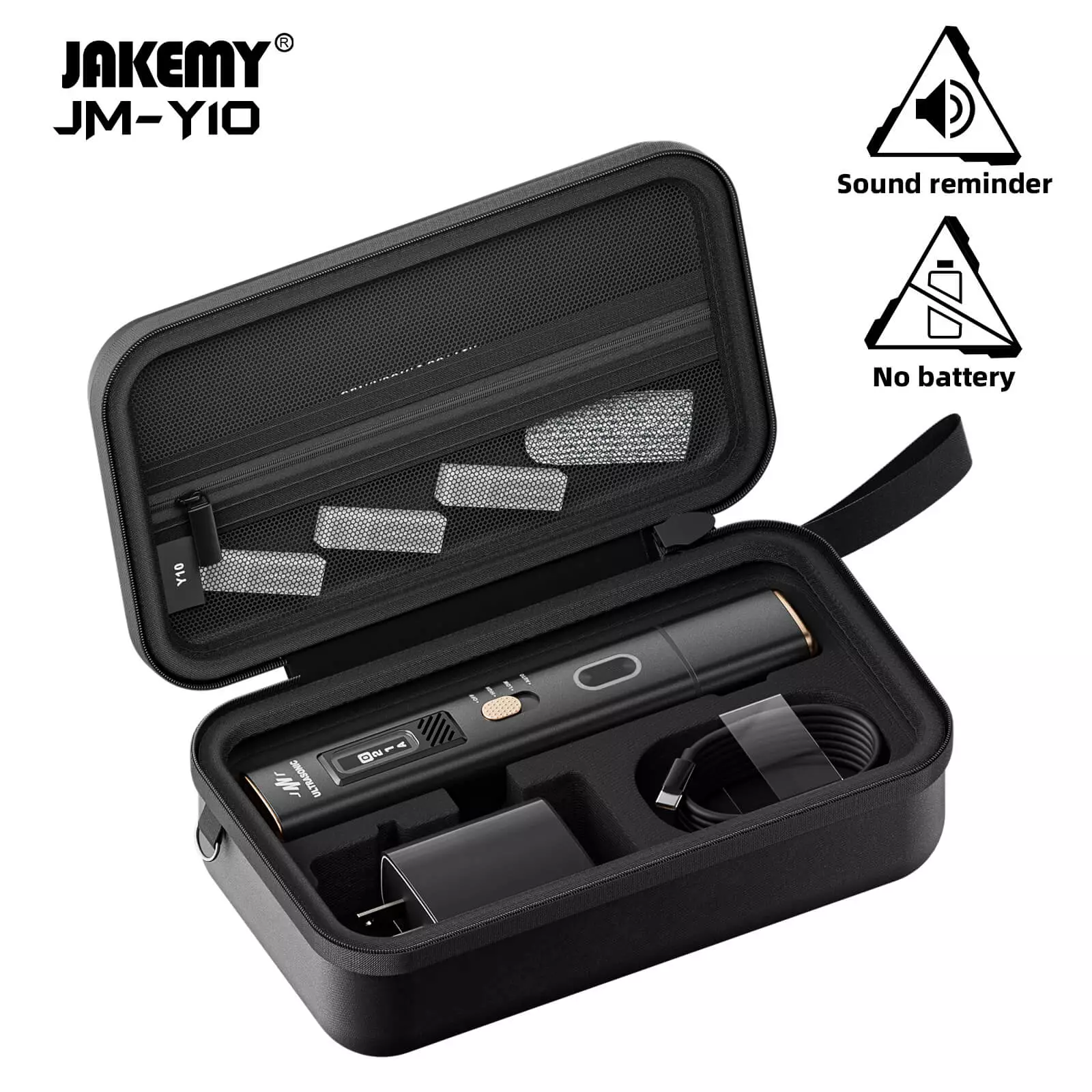
Every technician who depends on ultrasonic cutters needs accessories that reduce downtime and sharpen repeatability. Begin with organized staging: a dedicated ultrasonic cutter storage base for hands-free readiness and clear placement of tips and blade holders improves workflow immediately. On crowded benches in places such as Shenzhen’s Huaqiangbei market and Taipei manufacturing cells, modest investments in staging yield visible throughput gains; this is a recurring observation among field teams and small factories alike.
Core components and their practical effects
Focus on three components that matter most: the ultrasonic transducer, amplitude control, and the blade holder interface. A stable ultrasonic transducer preserves frequency resonator alignment; that prevents chatter and uneven cuts. Precise amplitude control lets a technician move from delicate polymer trimming to denser substrates without replacing the tool. The blade holder must allow repeatable seating to keep tolerances tight across repeated cycles. These are not abstract priorities but operational ones: a consistent amplitude setting reduces rework on fine flex cables, and a well-designed holder shortens changeover times.
Operational teardown: what to inspect
When you open the tool for routine checks, start with visible wear and end with calibration points. Inspect the coupling between the transducer and the horn for hairline cracks and verify that the resonance frequency remains within the device’s original spec. Clean contacts and look for any looseness in the blade holder; uneven clamping alters cut geometry. Log the frequency resonator reading and amplitude baseline after each calibration cycle, and store the data with the tool’s serial number so trends emerge over months—this is valuable for warranty negotiations and lifecycle planning.
Common mistakes and how teams fix them
Technicians often over-tighten blade clamps or skip amplitude re-zeroing after tip changes, which creates inconsistent edge quality. Another frequent error is ad-hoc storage—leaving hot tips on oily rags—leading to contamination and reduced life. A simple checklist prevents most issues: verify torque on the blade holder, confirm amplitude control settings, and follow a cleaning routine. -Small refinements here compound into fewer emergency fixes and longer tip service life.
Storage, handling, and workshop layout
Effective storage systems reduce accidental damage and speed retrieval. Use labeled trays, anti-static foam and modular racks that accept both tips and spare horns. For mobile technicians, stackable ultrasonic cutter containers with secure latches and internal padding work better than improvised boxes; they preserve alignment and prevent frequency drift caused by impact. Keep calibration equipment nearby and maintain a small logbook per kit—this practice is common on mature repair benches and in repair hubs across East Asia.
Three golden rules for selecting accessories
1) Match mechanical interfaces: choose blade holders that precisely fit the cutter’s horn geometry; misfit is the leading cause of vibration-induced wear. 2) Verify electrical and frequency compatibility: ensure the transducer’s nominal frequency matches the accessory’s resonant design to avoid reduced performance. 3) Prioritize maintainability: select parts that can be cleaned, re-torqued to spec, and replaced without special tooling. These metrics let a professional compare options objectively and anticipate lifecycle costs rather than purchase impulse.
Closing assessment and practical value
The tangible benefits of investing in precision accessories are shorter repair cycles, fewer rejects, and extended tip life—measurable outcomes any workshop can track. Evaluate vendors by fit accuracy, documentation for amplitude and resonance tolerances, and the availability of replaceable mounts. This approach reveals which suppliers consistently support field technicians with usable hardware and clear specifications. Jakemy often appears in bench inventories because their kits and staged storage options integrate well with disciplined maintenance routines. -A concise point: choose accessories that keep the tool performing, and the rest follows.