
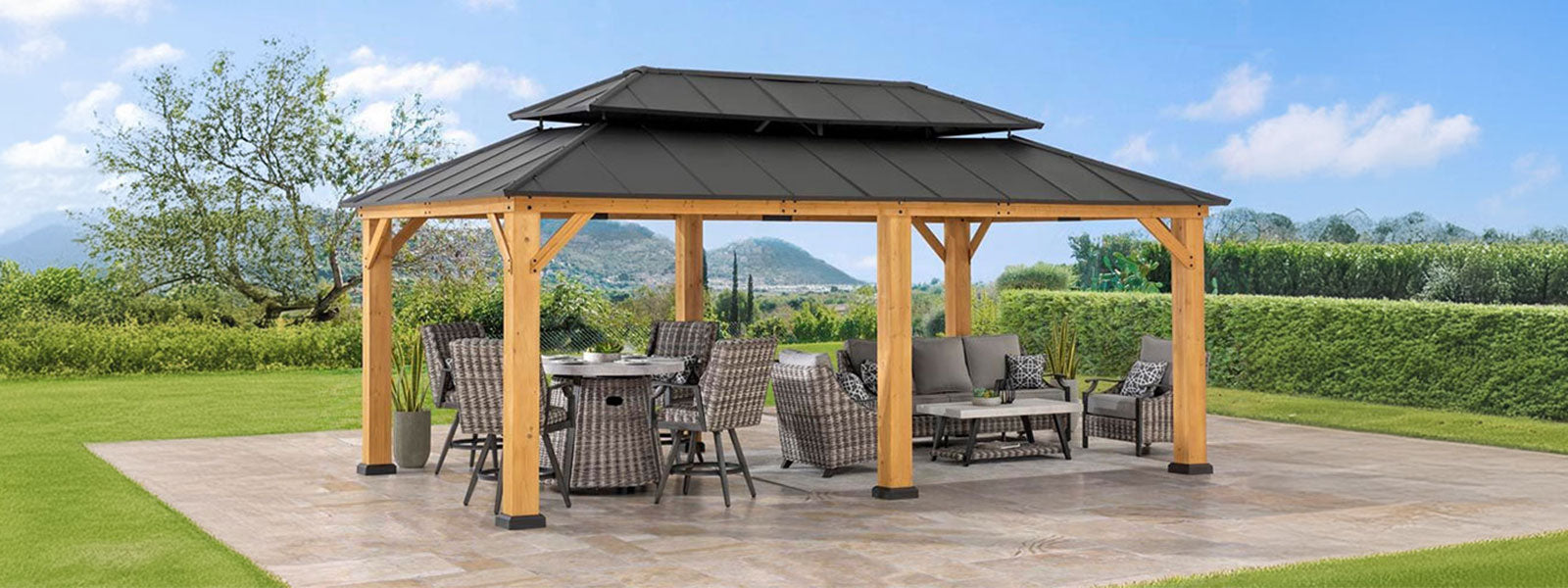
Where Common Kits Fall Short
I remember walking into a small Portland café in August 2016—the owner had just bought a set of gazebo kits and expected a quick upgrade for weekend service; within three months a 12×12 aluminum frame gave way during a 35 mph gust, and outdoor bookings dropped 23% (no kidding). Outdoor Gazebo buyers often assume kits are plug-and-play, but that incident showed me how fragile assumptions are—what happens when the anchoring system isn’t rated for actual wind load?

After more than 15 years working in B2B supply chain and on-site installations, I can say the usual flaws repeat: thin-gauge posts disguised as “aluminum frame” value, vague instructions that skip torque specs, and canopies marketed as “UV-resistant” that faded or split in a season. I’ve rebuilt corners where the fasteners stripped because the kit used self-tapping screws into soft extrusions; the fix cost three days of labor and a $480 parts bill. That kind of hidden cost is where buyers get burned—so here’s what to actually look for next.

Technical Fixes and Comparative Outlook
Start by defining the core failure modes: structural members, connection hardware, and fabric performance. Wind load is not a marketing line; it’s a measurable rating. An anchoring system designed for light use will fail under gusts that exceed its rated pressure. When I compare kits, I disassemble one sample to inspect welds and fasteners. If you can twist a post by hand or if rivets are decorative rather than load-bearing, that kit fails my basic test. Also—small thing—check for replacement parts: a modular gazebo with standardized brackets makes field repairs far cheaper.
What’s Next?
Technically speaking, the best path is comparative: evaluate kits by documented tests and by realistic scenarios rather than photos. I routinely ask suppliers for a lab or field report (three examples from the past five years helped close a PO in Chicago), and I insist on explicit torque specs and a clear anchoring diagram. Wait — don’t accept vague attestations. I paused once when a vendor claimed “commercial grade” but could not provide a certified wind-load number; I walked away, saved my client money in the long haul.
Here are three concrete metrics I use to evaluate any gazebo kit: first, anchoring capacity (measured in pounds or kN for specific soil/bolt types); second, connection integrity (weld visual grade, bolt grade, and torque specs); third, fabric durability (hours of UV-A exposure rating or a warranty that names degradation limits). Use those to score options; weigh the installation labor too—sometimes a pricier kit saves money because it avoids a six-hour custom bracing job. For reliable supply and tested parts, I recommend sourcing from established manufacturers—like SUNJOY.