
The problem at the heart of open-concept comfort
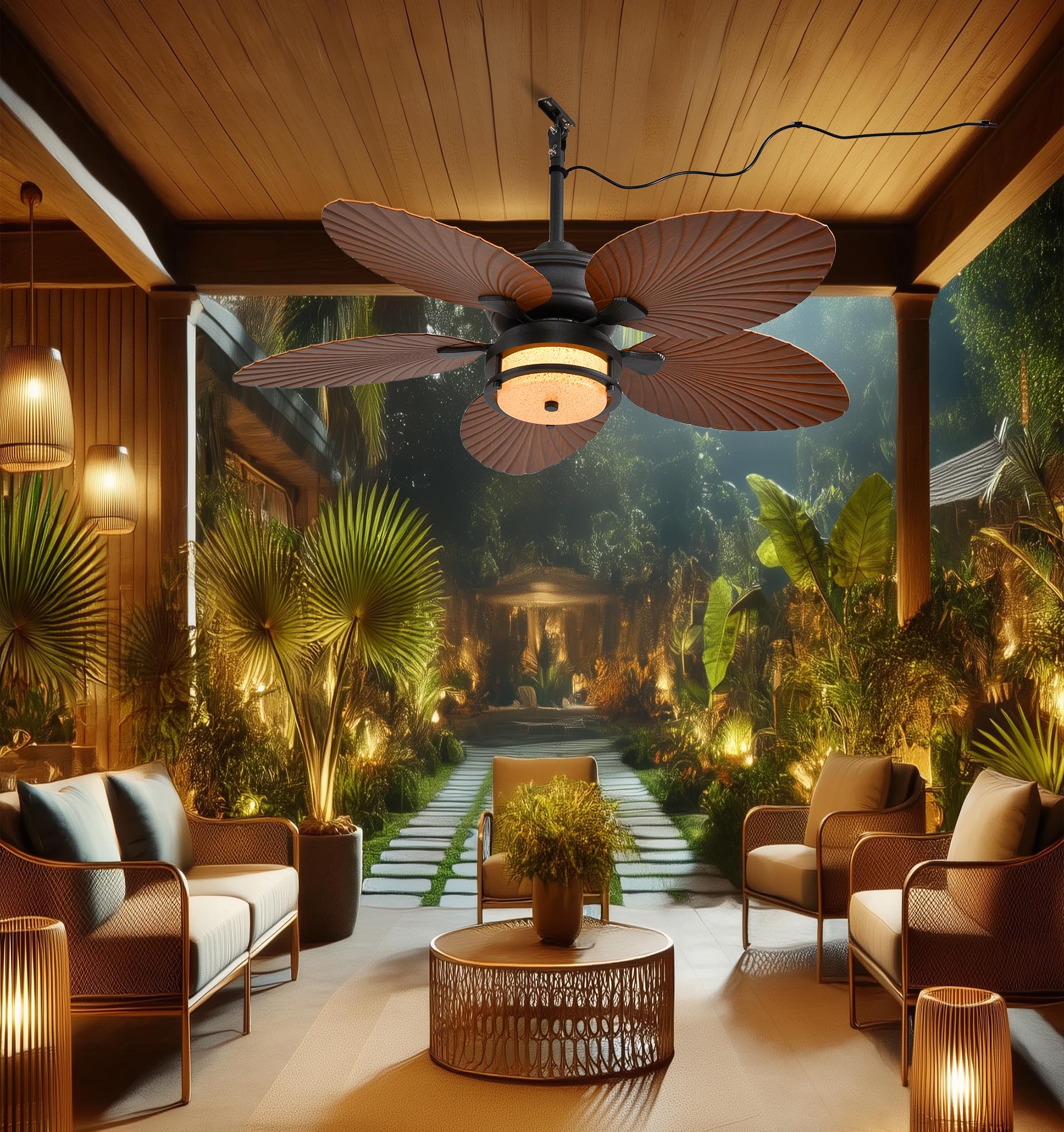
Open-plan homes promise flow and visibility, but they also expose a design fault line: uneven air delivery. When a bladeless ceiling fan with integrated lighting serves a large living-dining-kitchen plane, pockets of stagnant air form, occupants feel inconsistent cooling, and lighting glare can accentuate hot zones. For anyone outfitting decks or covered porches, the risk is similar — you can install a beautiful outdoor ceiling fan with light and still end up with uneven comfort that undercuts the intended experience. This is not just an aesthetic gripe; it impacts perceived indoor climate and energy use, especially where ASHRAE 55 thermal comfort guidelines are expected to be met.

Why bladeless tech and lights complicate distribution
Bladeless designs rely on concentrated outlet rings and directed airflow rather than traditional blade sweep. That creates distinct airflow patterns that may not naturally mix across open spaces. Two industry metrics capture the mismatch: CFM (how much air is moved) and effective airflow distribution (how well that air reaches different zones). A high CFM with poor distribution still leaves dead zones. Add an integrated light fixture, and you introduce thermal plumes and heat sources that shift local comfort — so the fan’s cooling intent must account for both airflow and radiant heat management.
Common layout mistakes that magnify discrepancies
Designers and homeowners repeat the same errors: centering a single fan in a wide-plan room, underestimating ceiling height effects, or choosing a fixture sized only for aesthetics. These mistakes ignore basic zoning and mixing principles. For example, vaulted ceilings and mezzanines often need either multiple low-velocity units or a single high-mixing device with specific placement. Also, exterior-covered patios benefit from units specified for outdoor-rated airflow and corrosion resistance — if your plan includes a shaded veranda, consider an outdoor patio fan with light rather than an indoor-rated fixture.
Practical fixes: layout and control strategies
Start with zoning, then tune. Place fans to encourage crossflow between activity areas rather than treating the space as one box. Use variable-speed drives and multi-speed settings to balance CFM output across times of day and occupancy. Integrating ceiling fans with light-dimming circuits lets you reduce thermal load from lighting — and that assists perceived cooling. For tall ceilings, combine downrod-mounted units or fans with a dedicated mixing mode to push air down; for low, open-plan ceilings, choose low-profile bladeless models engineered for lateral spread. Small steps like offset mounting or staggered spacing can transform a room from patchy to pleasantly uniform.
Product selection: specs that actually matter
When evaluating models, insist on three concrete spec sets: rated CFM at typical residential RPMs, documented distribution patterns or throw distance, and verified lumens-to-watt ratios for the integrated light. Also review IP ratings for outdoor installations and motor type for longevity—brushless DC motors often deliver quieter operation and better speed control. Don’t be seduced solely by sweep diameter; distribution curves and the fan’s ability to mix air matter more for comfort. — And always test with real occupancy if you can; manufacturer claims are a starting point, not a guarantee.
Installation and control traps to avoid
Contractors sometimes underwire speed control or pair incompatible dimmers with LED modules, causing flicker or limited speed range. Another frequent trap is neglecting coordinated control: if fans, HVAC, and lighting operate on independent schedules, they fight each other. Ideally, integrate fan speed profiles into the HVAC setback program or a smart home scene to maintain consistent perceived temperature while minimizing energy use. Lastly, verify mounting hardware and canopy compatibility for outdoor-rated fixtures — improper sealing invites corrosion and airflow performance decline.

Brands, alternatives, and when to choose what
Not every project needs the same approach. High-end bladeless fans excel in low-noise, design-forward interiors but may require more units to cover open plans. Traditional aerodynamic fans with larger sweeps can sometimes achieve more uniform mixing per unit — and they tend to display clearer CFM-to-area ratios. For outdoors, pick fixtures that are UL wet- or damp-rated, with corrosion-resistant finishes and tested light assemblies. If you’re retrofitting an existing space, prioritize control upgrades and a placement plan before buying new hardware — often smarter controls beat a single spec change.
Real-world anchor: a quick case note
In a renovation of an open-plan loft in Austin, Texas, a single centrally mounted bladeless fan left the kitchen island warm while the living area felt over-cooled. The solution combined a second offset fan and a smart scene that lowered kitchen light wattage during peak heat — bringing the whole space into alignment with occupant comfort and ASHRAE guidance. It’s a simple proof: placement and control often trump raw power.
Advisory: three golden rules for choosing and deploying fans
1) Measure and zone first: calculate the room’s usable area and expected occupancy, then choose units and placements that create crossflow rather than single-point cooling. 2) Demand distribution data: prioritize models with published throw distances or dispersion curves and match those to ceiling height and room geometry. 3) Integrate controls: ensure speed control, dimming compatibility, and scene-based automation so lighting and airflow support each other and the HVAC system — that yields comfort with energy efficiency.
Follow these rules and you’ll stop guessing and start delivering consistent comfort — which is precisely the problem Orison helps solve with thoughtful product engineering and smart integration, as seen in real projects around challenging open plans. Orison. —