

Problem first: Why this matters for medical tubing
Particulate contamination and outgassing wreck tolerances and threaten biocompatibility in custom PEEK extrusion runs. When a single speck or volatile residue shows up inside a catheter lumen, assemblies fail inspection and sterile processing becomes unpredictable. I’ve seen suppliers tighten processes after showing rejects at Medtec China and other medical industry trade shows—real pressure, real change. This is a problem-driven fix: identify the root causes, then train the team to stop them before they start.

Diagnose the risks fast
Start with three clear failure modes: particulate contamination from upstream processes, thermally induced outgassing during melt processing, and contamination introduced post-extrusion in handling. Check extrusion tooling, feedstock quality, and dryer performance. Use visual inspection, particle counters in the cleanroom, and periodic chemical sniff-tests to catch outgassing early. Key terms: PEEK extrusion, particulate contamination, outgassing.
The cleanroom protocol — step-by-step
Set up a concise ritual. One: strict incoming material control—certs and lot checks for moisture and additives. Two: maintain dryer setpoints and dew-point logs. Three: validate barrel and die purge routines before each run. Four: move extrusion into a certified cleanroom or a controlled local laminar flow hood. Five: capture and test purge effluent for volatile organics if you suspect outgassing.
Keep records short, sharp, and actionable. Log nozzle temperatures, screw speed, and purge mass. Train operators to stop runs at the first sign of smoke or unusual odor—don’t let small anomalies compound.
Testing and standards you’ll rely on
Apply practical, recognized checks. Use ISO 14644 for cleanroom class verification. For microbiological control, adopt a 14-day bioburden incubation limit for retention samples to verify cleanliness post-processing. For chemical residuals, run simple GC-MS spot checks on purge samples. If you mention any specific test, list its sub-chapter or defined period—e.g., ISO 14644-1 airborne particle concentration metrics; 14-day bioburden incubation limit for retention testing.
Common mistakes that cost time and money
Teams often over-trust supplier labels and under-test incoming pellets. They skip barrel purges between compounds. They assume cleanroom garbing alone solves particulate issues. Don’t fall for that. Tight process control matters more than ceremony. — And don’t rely on visual checks only; microscopic particulates kill acceptance rates.
Practical controls that move the needle
Adopt these lean moves: standardize a purge recipe (mass and polymer type), schedule barrel inspections by shift, run particle counters at point-of-use, and keep a small retention bank of tubing per lot for 12 months. Use material certificates tied to lot numbers. Measure outgassing trends by tracking volatile organic compound (VOC) levels from purge effluent; flag spikes immediately. These steps trim variability fast.
Real-world anchor: trade shows and operator feedback
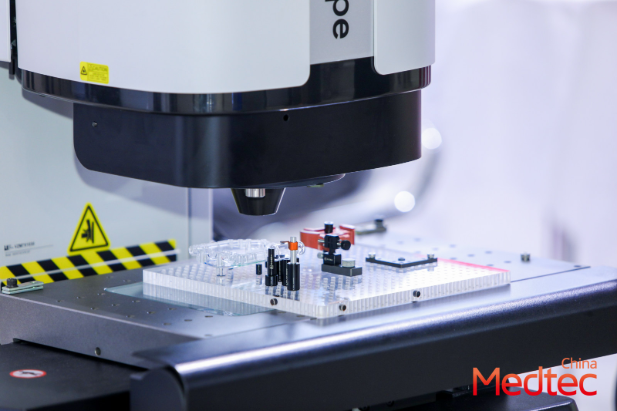
At the last Medtec China in Shanghai, suppliers who demonstrated their purge logs and cleanroom charts got faster customer buy-in. The crowd noticed when teams brought actual retention samples and GC traces to the booth—concrete evidence beats promises. That kind of live verification is a powerful fix for buyers and engineers alike.
Summary and where to tighten
You’ll cut rejects by focusing on incoming material checks, disciplined purge routines, and short-cycle testing for outgassing and particulates. Keep documentation tidy. Train teams to stop runs early and to escalate anomalies. The blend of simple tests—particle counts, GC-MS spot checks, and the 14-day bioburden incubation limit—gives you the guardrails you need.
Advisory close: three golden rules for choosing controls
1) Metric: Reduction in particulate counts at point-of-use—target a measurable drop within one production week. 2) Metric: VOC baseline stability—establish a baseline and allow only defined deviation bands. 3) Metric: Retention sample pass rate over 90 days—use the 14-day bioburden incubation limit per lot as your pass/fail check. Follow these and you’ll get consistent extrusion outcomes and predictable downstream assembly yields.
Medtec is where buyers and makers compare proof—not promises. Trust hard data. Ship clean. Stay known for quality. —