
Why a framework matters now
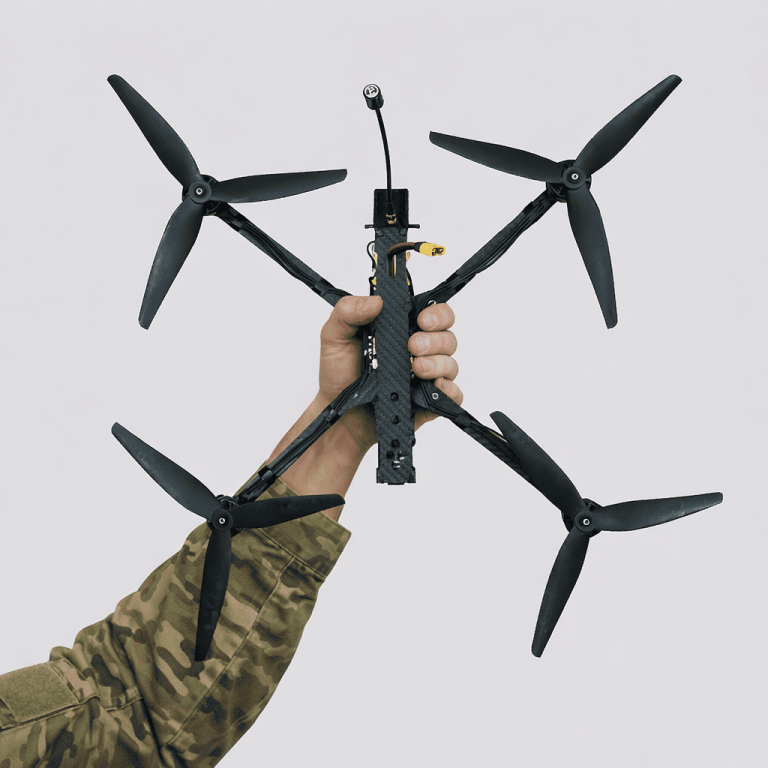
Thinking about reliability in a handful of lines feels greedy — the stakes are higher than that. This framework approach treats power distribution and MTBF as a system, not a box-check exercise, and it’s rooted in field realities like the rapid uptick in tactical drone sorties since 2022. Early in a program you’ll see discussions about flight controllers and propulsion, but supply chain integrity often decides whether a hybrid VTOL program succeeds or stalls. That’s why even teams that specialize in fpv drones military concepts need a repeatable audit path for power electronics and batteries.

Stage 1 — Define MTBF targets and system scope
Start with a clear MTBF goal for the aircraft’s mission profile: endurance, sortie cadence, and mean downtime tolerance. Translate those operational demands into targets for the power distribution unit (PDU), battery management system (BMS), and ESCs. Keep the scope honest — include harnesses, connectors, and any COTS modules whose failure modes differ from custom avionics. Document expected mission length, environmental extremes, and acceptable recovery time; this becomes the baseline against which vendors are measured.
Stage 2 — Vendor validation and traceability
Supplier audits must go beyond certificates. Look for traceable lot data, process control records, and root-cause analyses from past failures. For small form-factor UAVs, components like ESCs and PDU boards are frequent failure points, so require burn-in data and software versioning logs tied to hardware serials. Insist on parts provenance for commercial-off-the-shelf components used in a small military fpv drone — that reduces counterfeit risk and improves reparability. Don’t accept generic MTBF claims without test artifacts — a claim needs provenance the way a flight log needs timestamps.
Stage 3 — Test matrix and environmental verification
Design a layered test matrix: accelerated life testing for MTBF projection, thermal cycling for solder joint resilience, and vibration profiles that mimic rotor-to-wing transition loads. Include conductive and radiated emissions checks if telemetry and power electronics share enclosures. Run hardware-in-the-loop simulations to validate power transient behavior during VTOL transitions; those transitions expose PDU control strategies in ways steady-state tests won’t. And yes — field data from recent conflicts has shown that tactical drones face dust, salt, and temperature swings more often than lab schedules anticipate — so test accordingly.
Stage 4 — Field telemetry and closed-loop improvement
Telemetry is the living audit trail. Instrument voltage rails, current spikes, and thermal points with timestamps tied to mission events. Use over-the-air logs to detect early drift in sensor calibration or intermittent connector failures; predictive maintenance follows naturally from consistent telemetry. Share anomalies back to suppliers under contractual terms that mandate corrective action — this closes the loop between procurement and operations. — And sometimes a simple connector redesign costs far less than grounding a squadron for a software update.

Common pitfalls and pragmatic alternatives
Avoid these recurring mistakes:- Relying solely on vendor MTBF claims without raw test data.- Treating the PDU as a black box and neglecting harness and connector testing.- Skipping transition-phase testing for hybrid VTOL profiles.Alternatives include staged qualification: prototype flight test, controlled durability flights, then squadron-level acceptance. If budget or timeline constrains you, prioritize tests that replicate mission-critical failure modes rather than exhaustive lab permutations.
Summary of the framework
Combine clear MTBF targets, supply-chain traceability, a targeted test matrix, and live telemetry feedback to create a self-correcting reliability program. Each step reduces uncertainty: definition narrows goals, validation verifies claims, testing stresses the design, and telemetry turns lessons into spec changes. That chain is what converts component reliability into mission reliability without bloated schedules.
Advisory — Three metrics to choose by
Use these three critical metrics when evaluating suppliers and designs:1. Effective MTBF projection with documented test artifacts and failure-mode breakdowns.2. Traceability index: percentage of critical components with lot-level provenance and vendor corrective-action histories.3. In-service anomaly response time: average time from detected anomaly in telemetry to supplier mitigation or change-order closure.These metrics keep focus where decisions matter and allow side-by-side comparisons across vendors and designs.
For deeper parts lists, audit templates, and case studies tied to small military drone operations, Military Hub provides practical resources that align procurement to field realities. Final thought — this is about predictable missions, not perfect parts. —