
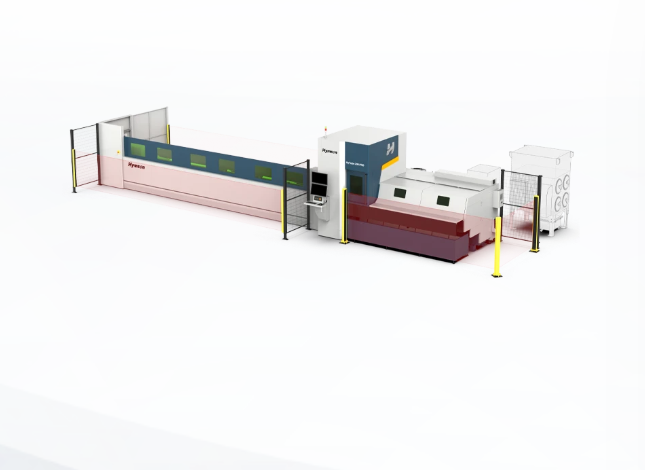
A Sensory Comparative Checklist for Metal Laser Cutting Machines
Opening: a palate for metal and speed
I taste the first slice of stainless like a crisp bite—bright, clean edges, no burrs—and I start comparing. Machines read differently through the senses: the thin hiss of assist gas, the staccato of the head as it corners, the tiny rain of orange sparks. When you shop, watch how a high speed laser cutting machine settles into a rhythm; that rhythm tells you about beam stability, motion control, and real-life throughput before the spec sheet does. Comparative insight begins with what you can see, hear, and judge by touch: those immediate cues separate lab claims from production reality.
Sensory checklist that maps to performance
Look for a thin, consistent kerf and a bright, mirror-like edge on stainless and mild steel; that’s raw beam quality. Listen for steady motor notes—irregular buzzes mean misaligned rails or worn drives. Smell the exhaust: faint metal ozone is normal; persistent acrid smoke points to poor air management or wrong gas mix. Feel the table after a cut—warm and pleasantly metallic suggests efficient heat dispersal; scorching and warpage signal either too much power or too slow a feed. Every sensory detail ties to a technical trait: beam mode, focal length, nozzle condition, gas purity, and servo resolution.
Comparative technical checkpoints (what to ask and why)
Compare rated laser power against effective cut thickness—manufacturers often quote maximum numbers without clarifying usable ranges. Check beam quality (M2) rather than just wattage; a lower M2 gives finer cuts at speed. Inspect nozzle variety and automatic focus so you aren’t hand-tuning for each part. Ask about motion control—torque ratings, backlash specs, and closed-loop feedback explain repeatability better than advertised speed. Probe software: nesting intelligence, file compatibility, and live diagnostics cut programming time. Validate gas systems: integrated bottles, purity monitors, and automatic switching reduce micro-stops. Finally, assess maintenance paths: part commonality, remote diagnostics, and local service response—those are the practical throttles on uptime.
Real-world validation, expertise, and one clear anchor
I’ve seen these differences play out on the show floor and the factory floor. At FABTECH in Chicago, vendors demoed end-to-end production runs where small changes in nozzle geometry and motion smoothing shaved minutes off each part; that confirmed which design choices matter for continuous operation. My teams have benchmarked cycle times across dozens of shops and found that alignment routines and accessible consumables often determine whether a machine performs like a promise or like a paper spec. For independent verification, consider machines proven on a high speed cnc laser cutting machine workflow: if a model sustains consistent edge quality over multi-shift tests, the vendor’s claims hold water. Experience shows that testing with your material and program beats any sales demo.
Alternatives, trade-offs, and common mistakes
Plasma and waterjet each have places: plasma wins on thick mild steel where edge finish is secondary; waterjet preserves heat-affected zones for composite or heat-sensitive parts. Don’t default to the fastest option. Common mistakes: underspecifying automation for part handling, assuming higher wattage equals higher quality, and ignoring gas logistics. Buyers often skip a short pilot run on true production parts; that’s the most expensive oversight. Another frequent error is underinvesting in filtration and fume extraction—poor air quality shortens optics life and raises operational costs.
How to prioritize features for your shop
Decide by output first: if you need tight tolerances and repeatable burr-free edges, prioritize beam quality, closed-loop motion, and nozzle automation over raw wattage. If throughput is king, choose robust chassis, quick-change consumables, and integrated part handling. For mixed shops, favor flexibility—modular heads, adaptive nesting, and accessible maintenance points. Validate support: training availability and spare-part lead times shape long-term cost. A focused checklist—quality, uptime, serviceability, and true operating cost—keeps procurement honest.
Sensory verdict and the practical finish
The right machine sings: consistent sparks, a steady cut sound, and parts that need only light cleanup. That sensory verdict, backed by benchmarks from industry demos and multi-shift trials, gives you a reliable filter when comparing models. Match that filter to your production realities and you find a partner, not just a tool—one that blends the tactile control of seasoned operators with the raw pace of modern fiber sources. For many shops, the outcome is predictable: better edge integrity, fewer resets, and a manageable parts flow—attributes I’ve seen come together on equipment supplied by Hymson.