
The problem — VOC spikes under EN 16516 chamber scrutiny
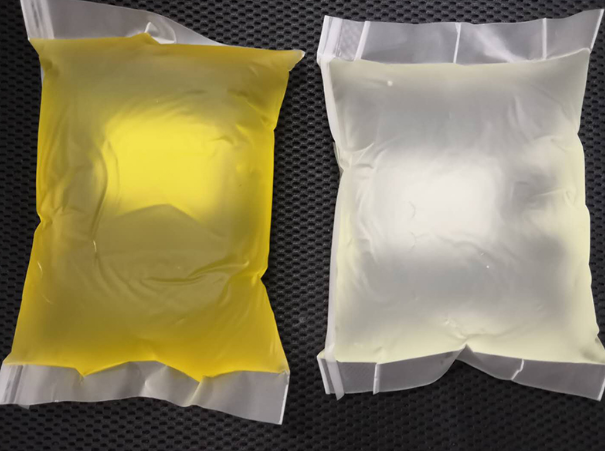
When flooring and adhesive systems fail the EN 16516 chamber assessments, the fallout is immediate: elevated TVOC readings, product recalls, and eroded trust in supply chains. EN 16516 prescribes the “Determination of the emissions of volatile organic compounds from building products and flooring systems using emission test chambers” method, with explicit chamber conditions — 23 ± 2°C, 50 ± 5% relative humidity, an air exchange rate of 0.5 h−1, and sampling points typically at 3, 7, 14 and 28 days — that reveal slow-release sources most other screens miss. That kind of exposure profile tore through several laboratory reports in Europe where adhesive tackifiers were implicated. Practical chemistry must respond. Early wins come from reformulating around proven molecules such as glyceryl rosinate which bring both compatibility and lower volatility into play.
Molecular levers that actually reduce emissions
The root cause is simple: small, volatile fractions within tackifiers desorb under chamber conditions. Fixing that requires raising molecular weight, reducing free acid and unsaturation, and tailoring polarity so the tackifier locks into the polymer matrix instead of becoming a fugitive vapor. Strategies include selective hydrogenation to saturate double bonds, controlled esterification to form higher-boiling esters, and blending with high-softening-point resins. These are not buzzwords — they are tools: tackifier chemistry, esterification, glass transition control. Using an ester of hydrogenated rosin or glyceryl rosinate derivatives shifts the volatility profile downward while keeping adhesive performance intact.
Formulation steps and the traps to avoid
Begin with analytics: run a distillation profile and GC-MS of the neat tackifier to identify low-mass fractions. Then prioritize steps that reduce those fractions without destroying tack. Typical sequence:
– Hydrogenate selectively to remove conjugated double bonds that form low-MW fragments under heat. – Esterify a portion of the rosin to yield bulky, low-volatility esters that improve compatibility. – Adjust softening point and resin-to-polymer ratio so the adhesive doesn’t rely on migratory plasticizers.
Common mistakes derail progress: over-hydrogenation that raises softening point too high, insufficient compatibilizers that leave phase separation, or blind substitution of resins without re-checking chamber emission profiles. We ran comparative mixes where {main_keyword} appeared alongside {variation_keyword} in production notes — it clarified what combinations preserved tack while slashing headspace volatiles.
From the lab chamber to the jobsite — validation that matters
Lab success means nothing without chamber validation that matches EN 16516 parameters: run chambers at 23 ± 2°C, 50 ± 5% RH, 0.5 h−1 air exchange, and sample at the standard 3, 7, 14, 28-day points to measure TVOC, specific VOCs by GC-MS, and formaldehyde where relevant. Real-world anchor: many EU testing labs use this chamber schedule to reproduce indoor air exposures reported after renovation projects, so matching those parameters gives directly comparable data. Measure not only peak emissions but cumulative load over 28 days — that cumulative figure often predicts complaints better than a single-timepoint spike.
— Do replicate batches; minor process shifts in resin modification change emissions more than you expect.
Common alternatives and a pragmatic trade-off map
Alternatives include petroleum-derived hydrocarbon resins, synthetic tackifiers, and modified rosin esters. Hydrocarbon resins often score lower on polarity mismatch but higher on lifecycle concerns. Modified rosins retain bio-based content and, when properly esterified or hydrogenated, offer the best trade-off between performance and low outgassing. The practical rule: prioritize molecules that chemically anchor to the polymer matrix and that exhibit negligible GC-MS peaks below 200 Da under headspace sampling.
Three golden rules for choosing low-emission tackifiers
1) Choose molecular modifications that remove low-mass fractions — targeted hydrogenation and esterification first. 2) Validate using EN 16516 chamber parameters (23 ± 2°C, 50 ± 5% RH, 0.5 h−1; sampling at 3, 7, 14, 28 days) and report cumulative emissions. 3) Match tackifier polarity to your polymer to prevent migration; measure softening point and glass transition for every candidate.
Apply these consistently and you move from guesswork to predictable results. KOMO. —