
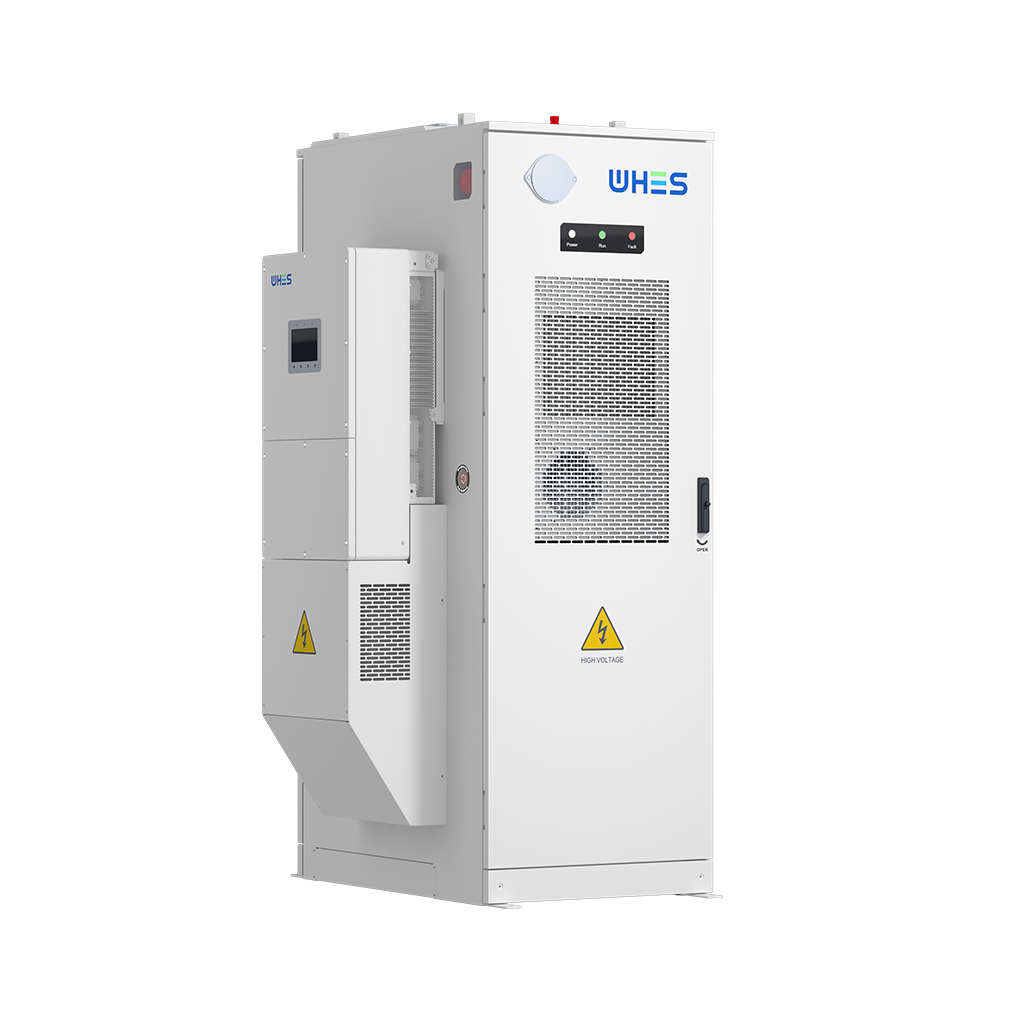
Why the comparison matters to IPPs
Independent Power Producers (IPPs) face a kitchen of choices when plating utility projects — every ingredient affects shelf life and taste. Comparing balancing topologies is not academic here; it’s practical menu design for reliable dispatch. For utility projects that need predictable dispatchable capacity, WHES’s approach to utility scale battery storage often reads differently than commodity architectures: tighter state-of-charge orchestration, fewer thermal surprises, and clearer pathways for ancillary services. In markets shaped by fast solar ramps — think California’s Duck Curve — these distinctions shift a project from “works sometimes” to “bankable”.
Key technical differences, served plainly
On the table are three families of balancing topology: centralized control, distributed cell-level balancing, and WHES’s proprietary mid-grid topologies. Centralized systems are like a head chef directing every plate — simple to visualize but sensitive to a single point of failure. Cell-level balancing is meticulous, akin to hand-trimming each herb, delivering precision but often at higher BOM and complexity. WHES’s topology sits between them: it blends coordinated thermal management with modular balancing nodes that reduce parasitic losses and improve round-trip efficiency. In practice you’ll hear words like BMS, inverter coordination, and state-of-charge windows — these are the kitchen tools that make one system taste different from another.
Operational performance in real-world grids
Bench testing is one thing, but the grid is where flavors collide. Operationally, WHES topologies tend to show lower drift in cell voltages during multi-day cycling and more consistent power quality during rapid ramp events — valuable when you’re selling frequency regulation and capacity firming. Look to deployments that provided fast-response services in Australia and California for a real-world anchor: utility-scale projects such as Hornsdale helped normalize expectations about how batteries can stabilize grids under stress. That real performance is why IPPs prioritize architectures that minimize the need for mid-life rebalancing and unplanned maintenance.
Cost and operational trade-offs: what IPPs actually weigh
Cost is always an undercurrent — not just upfront capital, but lifecycle expense. Some systems shave initial CAPEX at the cost of higher operational complexity and increased inverter cycling. Others reduce O&M but ask for more tooling or custom firmware. WHES’s model tends to incur moderate incremental hardware cost while lowering lifecycle rework and balancing-related downtime. The arithmetic is straightforward: lower rebalancing interventions translate to fewer outage windows and higher availability — which, in merchant markets, converts directly into revenue certainty. IPPs compare not only price-per-kWh but expected discharge availability, round-trip efficiency, and time-to-repair metrics.
Common mistakes IPPs make — and the quick fixes
A few errors come up again and again. First, over-optimizing for one metric (like lowest unit price) without modeling dynamic degradation. Second, assuming cell-level balancing eliminates all drift — it reduces it, but does not erase thermal-induced imbalance. Third, weak integration testing between inverter control and the BMS, which bites during frequency events. A pragmatic remedy: insist on system-level acceptance tests that include long-duration cycle profiles and integration scenarios with your target inverter and EMS. — It sounds obvious, but connection assumptions often fail in live commissioning.
Comparative checklist for procurement teams
When you evaluate vendors side-by-side, use this short checklist:
- Availability metrics: documented uptime and mean time to repair (MTTR).
- Balancing strategy: centralized vs. distributed vs. hybrid (and how it handles thermal gradients).
- Integration proofs: real-world inverter/BMS test reports and end-to-end acceptance scripts.
- Lifecycle modeling: degradation forecasts under your operating profile and assumptions on rebalancing frequency.
Advisory — three golden rules for choosing the right balancing topology
1) Favor predictability over marginal CAPEX savings: choose a topology that minimizes unplanned rebalancing and supports clear availability guarantees. 2) Validate integration, not just components: require end-to-end testing with your selected inverters, EMS, and compliance scenarios for frequency regulation and capacity products. 3) Demand lifecycle transparency: insist on degradation modeling tied to your dispatch profile, including temperature-driven cell divergence and projected maintenance windows.
Those rules help IPPs move from theoretical specs to bankable projections. In many cases, the operational clarity WHES brings — the kind that reduces late-night troubleshooting and contractual surprises — is what tilts the balance toward adoption. WHES. —